


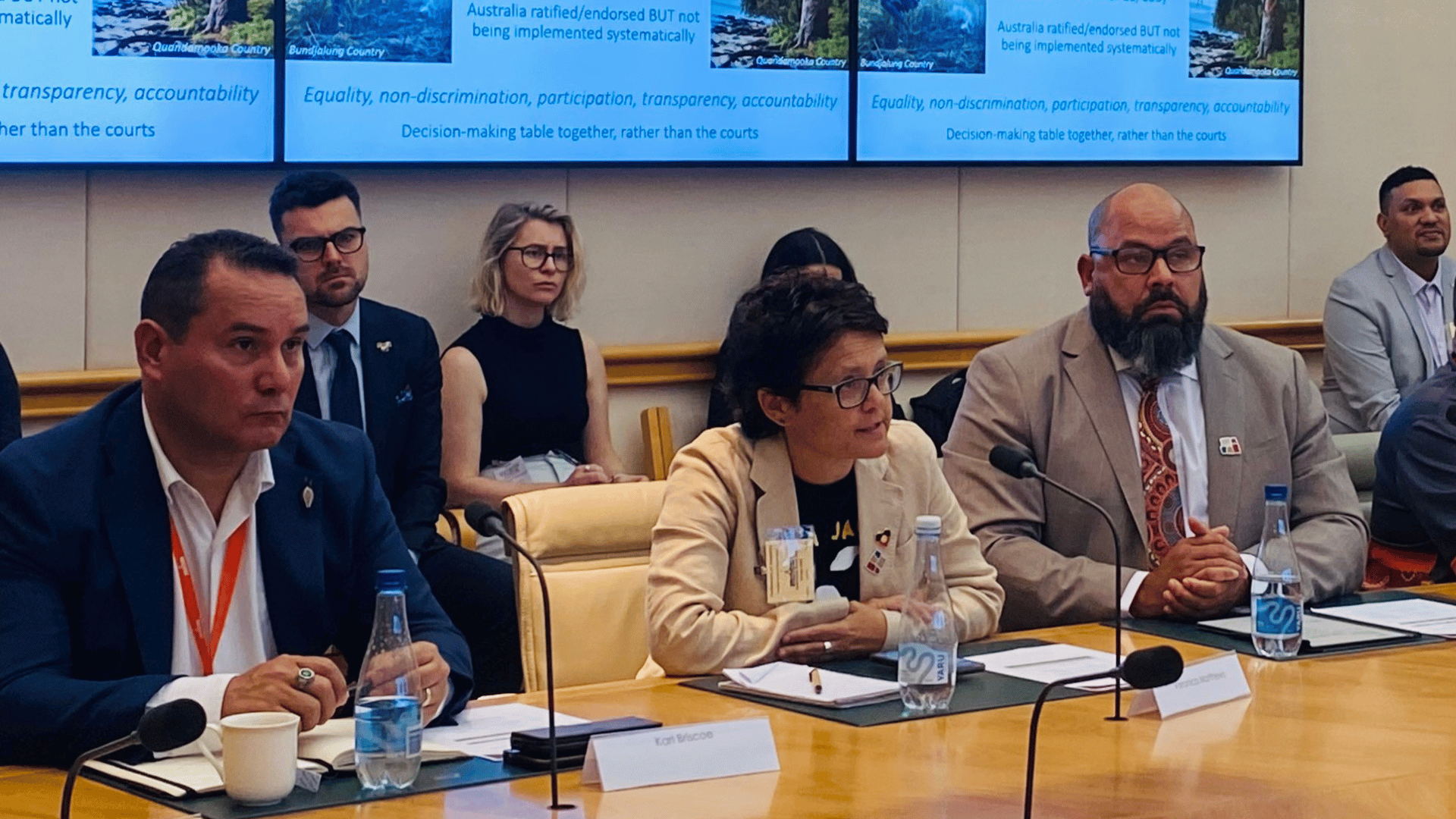
“I think the legacy I see from those [researchers] who came before me is the space that they’ve created. The space that they hold and the encouragement they bring for us young people to come into that space. I stand on the shoulders of giants.”
When Aboriginal researcher Talah Laurie reflected on her experience with the STRIDE research network, she could just as easily have been describing the broader story of Aboriginal health research at UCRH.
For 25 years, Aboriginal health has been one of the threads running through UCRH’s work. Long before major grants and national collaborations, researchers were building relationships with communities, listening carefully and asking how research could better serve Aboriginal people and communities.
Researchers including Professor Megan Passey, Janelle Stirling, Dr Wendy Hermeston, Dr Sean Wilson and Professor Lesley Barclay were instrumental in establishing that foundation. Their work reflected a growing understanding that lasting change comes through partnership, trust and a commitment to tackling the issues communities identify as important.
Former UCRH Director Professor Ross Bailie arrived in Lismore in 2016 with a similar philosophy.
More than 20 years earlier, while working in Darwin, Ross had become interested in finding ways to do research that made a practical difference. He helped build collaborations that brought together communities, health services and researchers around a shared goal of improving Aboriginal health care.
At UCRH, that work continued to grow.
One of Ross’s strengths was bringing people together. Among those he introduced to UCRH was Quandamooka researcher Associate Professor Veronica Matthews, whose work would help shape contemporary Aboriginal health research in the organisation.
Ross and Veronica helped establish STRIDE, the Centre for Research Excellence in Strengthening Systems for Indigenous Health Care Equity. Drawing on decades of collaboration, STRIDE united researchers, health services, policymakers and communities from across the country to improve health care for Aboriginal and Torres Strait Islander peoples.
Importantly, communities were not simply participants. They were leaders, partners and decision-makers.
That approach continues to guide UCRH’s work today.
It can be seen in projects like VOICE, which is helping Aboriginal communities shape how health services collect and respond to patient feedback. It can be seen in STAUNCH, which is focused on strengthening community-led health solutions and self-governance. It can be seen in research exploring climate, housing, food security and the connection between healthy Country and healthy communities.
Today, a new generation of Aboriginal researchers is carrying that work forward. People like Talah – and many others – are building on foundations laid by those who came before them while creating new, and more opportunities for those who will follow.
