


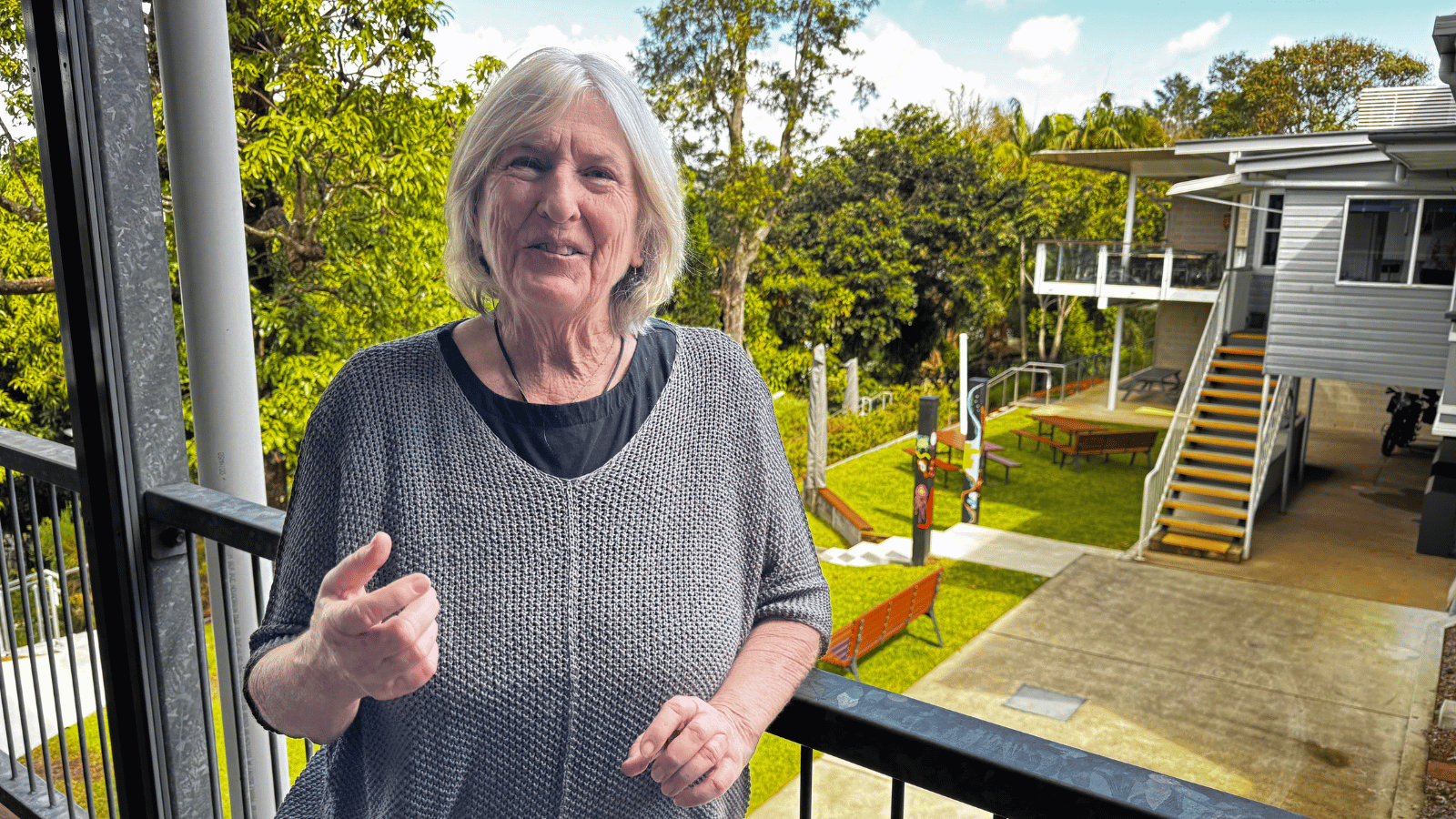
Christine Ahern did not set out to become a medical educator.
She trained as a doctor, worked as a GP, taught registrars and built a career in clinical practice. But somewhere along the way, teaching stopped being the extra thing she did alongside medicine and became the thing that kept pulling her in.
More than twenty years later, after mentoring generations of students and health professionals, she still talks about teaching with the enthusiasm of someone who feels lucky to have found it.
“It was actually in 2005 I took a jump into medical education,” she recalls. “I found I loved it.”
For her, the appeal has always been the students themselves.
“They keep us on our toes, keep us young, keep us relevant,” she says. More importantly, they are not afraid to ask questions.
“They’re not shy about challenging you. And that’s fine. That’s good. We need to be challenged.”
Over the years she has watched medical students change. They arrive with laptops instead of textbooks, instant access to information and now, increasingly, have artificial intelligence at their fingertips. Yet in many ways they haven’t changed at all.
“They’re still curious, passionate, for the most part really mature, and people who really want to learn.”
The tools may be different, but the fundamentals remain the same.
As technology becomes more powerful, Christine believes the human side of medicine becomes even more important. Knowing how to read a room. Listening properly. Understanding what a patient is really saying.
“Communication is the bottom line,” she says.
Those lessons are often easier to learn in a rural setting.
For 25 years, UCRH has given medical students the chance to learn close to patients, clinicians and communities. Instead of standing at the back of a crowded ward, students are encouraged to get involved, ask questions and develop confidence through hands-on experience. Christine says that practical exposure is something students consistently tell her sets rural training apart.
She believes that experience has had a lasting impact on the region. Some students arrive for a placement and discover a career they had never considered. Some return years later as doctors. Others build their entire working lives in rural communities.
“We have made an impact on people staying here,” she says.
If there is one thing she hopes every student takes away from UCRH, it is a sense of belonging.
“We are like a big family,” she says. “Our first response, if there’s an issue, is we will help.”
Perhaps that has been one of UCRH’s defining features over the past 25 years. Not simply training future doctors, but giving them a place where they feel supported, challenged and connected to the communities they serve.
