


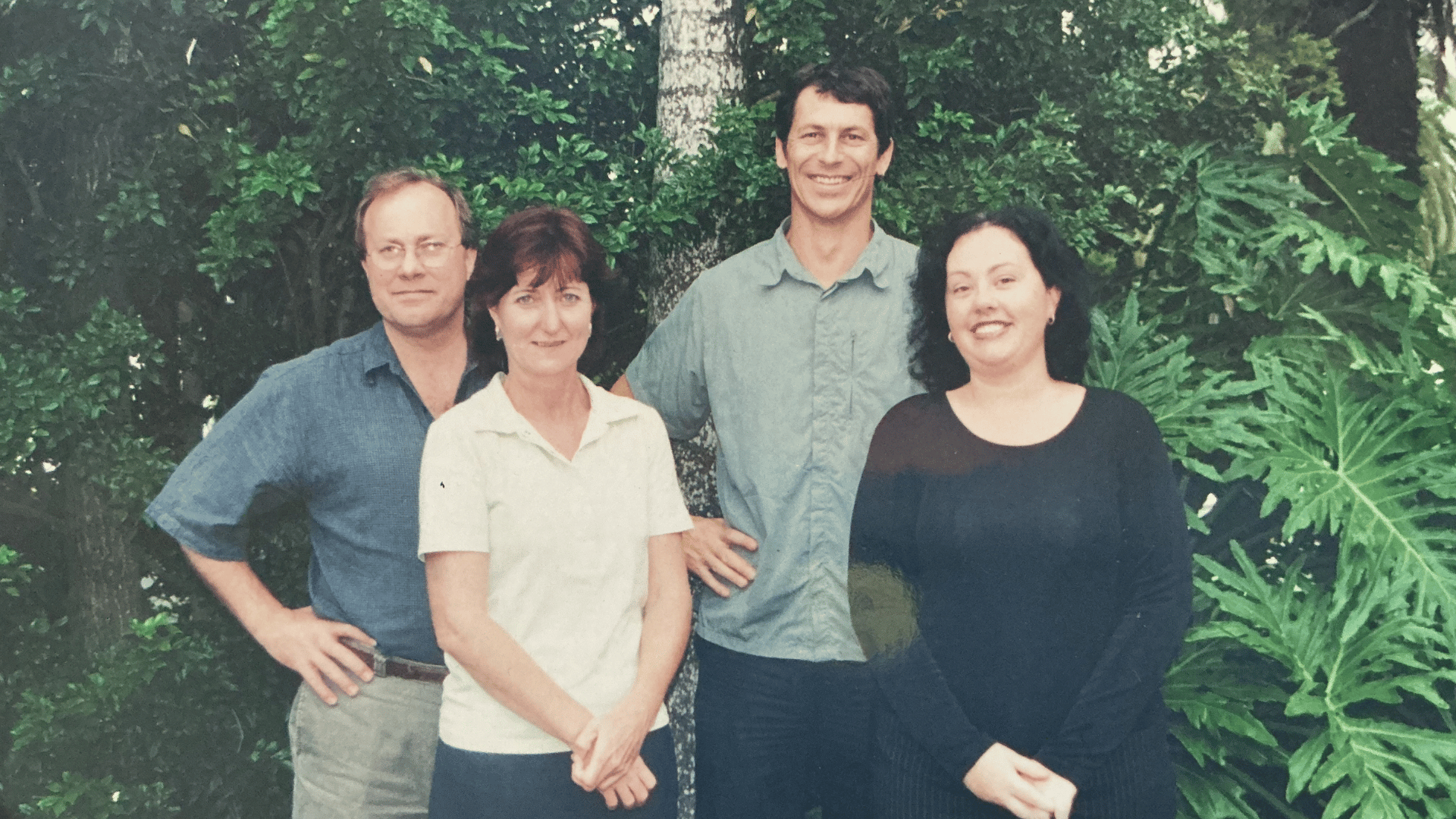
When Professor John Beard talks about the beginnings of the University Centre for Rural Health, he doesn’t start with grand plans, strategic documents or ribbon cuttings.
“There was nothing,” he recalls matter-of-factly.
Today, UCRH is a bustling centre for rural health education, research and workforce development. Students arrive from across Australia. Researchers lead projects with national and international impact. The campus spreads across a collection of buildings opposite Lismore Base Hospital, surrounded by established gardens and a towering flame tree that has become part of the organisation’s identity.
Twenty-five years ago, none of that existed.
The centre’s first director, now based in New York as a senior academic at Columbia University after a stint with the World Health Organization, was part of a small team tasked with creating something entirely new.
The challenge was equal parts vision, persistence and improvisation.
First they had to secure funding. Then they had to find a building. Then they had to persuade hospitals, universities, health professionals and governments that this fledgling rural centre was worth backing. Much of the work happened on the run. At one point, Beard jokes, UCRH was essentially “me and a mobile phone”.
The campus itself began as an act of imagination.
Beard remembers walking around what would become the UCRH site with colleague Dr Kim Webber, who he describes as critical to the organisation’s success. At the time, it was a neglected block with a couple of ageing buildings and plenty of potential.
“She looked at me and said, ‘Are you sure about this?’” Beard remembers.
“I said, ‘We just got to have imagination, Kim. Let’s go for it.’”
Twenty-five years later, the site has grown into exactly the kind of place he hoped it would become, though for Beard, buildings were never the main point.
His vision was that UCRH should be more than a rural health centre. He wanted it to be a centre of excellence located in a rural community. The distinction mattered.
At the time, many people assumed research in rural Australia should focus only on rural health problems. Beard took a broader view. Why, he wondered, should talented researchers, clinicians and educators have to move to a capital city to pursue ambitious careers? Why couldn’t they build world-class expertise while living and working in places like the Northern Rivers?
It is a philosophy that shaped his own career.
From a rural GP in Kempsey and director of a start-up organisation in Lismore, Beard went on to address international forums, influence health policy around the globe, and lead major initiatives that have touched hundreds of millions of lives.
Yet he sees a direct line between those achievements and his time in the Northern Rivers.
“I couldn’t have ever done that if I didn’t have my job in Lismore,” he says.
That belief remains central to how he sees UCRH today: not just as a place that trains health professionals or produces research, but as a springboard for opportunities people might not otherwise have.
