


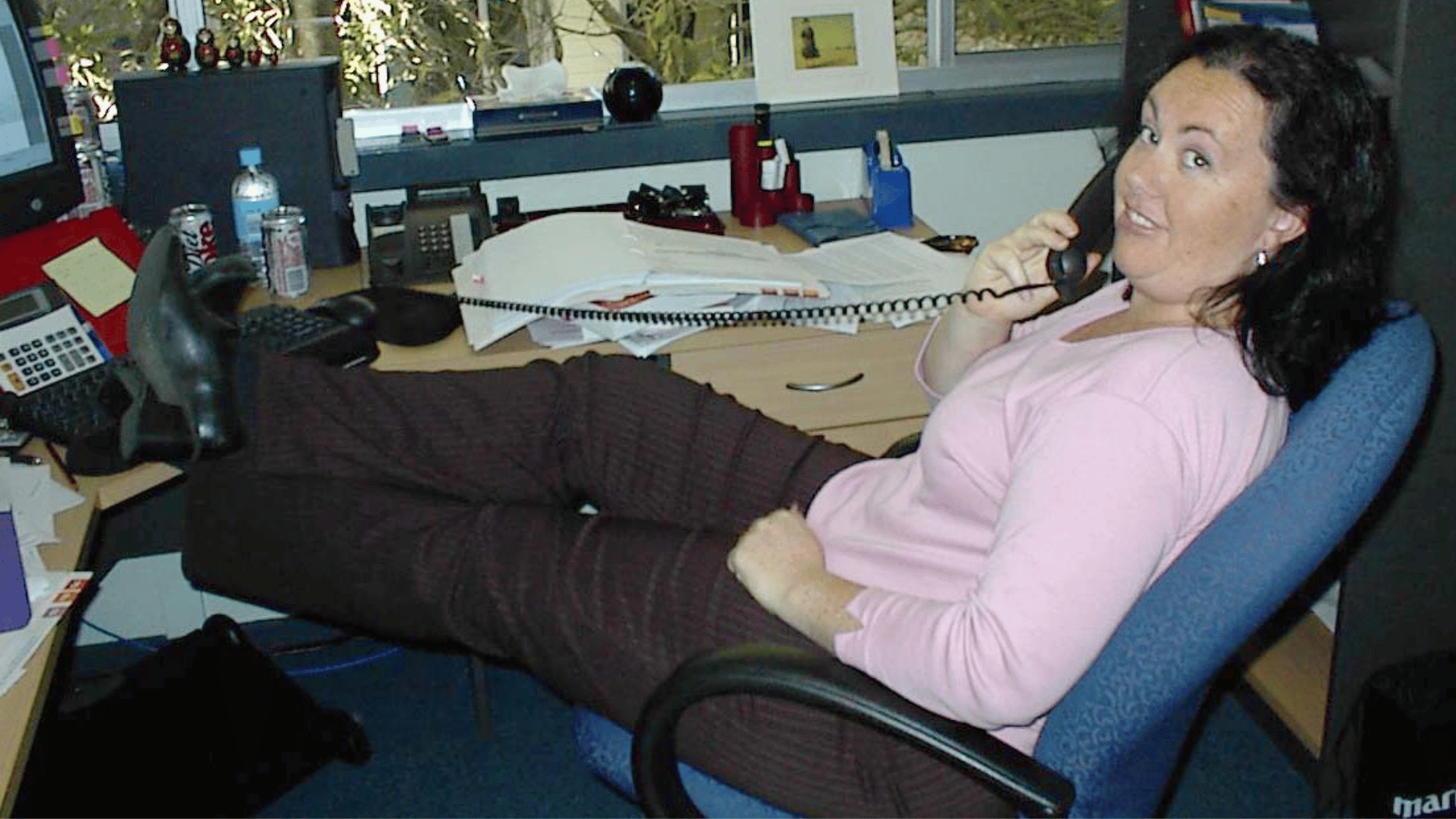
In an old photo from the early 2000s, a staff member reclines in an office chair with feet up on the desk, old-school phone wedged to an ear, surrounded by paperwork and the organised chaos of a start-up. It is the sort of photo that would make a modern workplace health and safety officer raise an eyebrow.
For Dr Kim Webber, it is also a snapshot of a time when almost everything about UCRH was still being invented.
Kim was the second person hired at UCRH after founding director Professor John Beard, arriving from Canberra to help establish what was then known as the UDRH. She had never met John in person before her first day. Coming from the world of government policy, she turned up in a suit. He greeted her in bare feet, with sand on the floor and a surfboard leaning against the wall. It was, she laughs, a collision of two very different workplace cultures.
Looking back, Kim can see how that unlikely partnership worked. John was a visionary, deeply connected to the region and full of big ideas. Kim understood government, funding and how to turn ideas into something tangible. Together with other early staff members including Hudson Burden, Wendy Byron and others, they made an incredibly effective team.
The reality of those early years was far less glamorous than the legends might suggest. With only a handful of staff, everyone did a bit of everything. One day Kim was helping develop a logo. The next she was choosing paint colours, setting up banking arrangements, organising student accommodation or managing research grants.
Some of those decisions left a lasting mark. Kim secured funding to buy two student accommodation houses behind the centre, buildings that are still part of UCRH today. “There you go,” she joked when told they remain in use, pondering whether the lockbox code was still her birthday, as it was when she visited the Centre many years after she’d left.
What she remembers most, though, is the sense of possibility. The team was small, the ambition was enormous and there seemed to be very few limits on what could be achieved. Within a couple of years they were leading nationally significant research projects and building connections across rural Australia.
Twenty-five years later, UCRH has grown beyond anything visible in that old photo. Yet Kim is not surprised. The ambition, she says, was there from the beginning. The challenge was never to be good “for a rural area”. It was simply to be excellent, while happening to be based in one.
