


The document wasn’t especially complicated.
After two years of meetings, negotiations and drafting, the agreement signed in the mid-2000s that established the North Coast Medical Education Collaboration was, according to Dr Sue Page, remarkably simple.
“It was basically we just agree that we’re going to play nicely together.”
Simple on paper. Revolutionary in practice.
Traditionally universities were protective of their teaching programs. Yet in the Northern Rivers, the University of Sydney, Western Sydney University and the University of Wollongong agreed to share placements, share resources and work together to train future doctors.
The result was the North Coast Medical Education Collaboration, or NCMEC, a program that would help reshape rural medical education while building on foundations already laid by UCRH.
By then, the organisation had already spent several years building relationships across the region. Hundreds of allied health, nursing and short-term medical placements were taking place each year, creating a network of clinicians, health services and communities ready to support something bigger.
Looking back, Sue believes that groundwork was critical.
“It was perfect,” she says. “If we’d gone straight into long-duration medical training, we may never have built the same strength in the multidisciplinary aspects.”
What followed wasn’t simply an expansion of medical placements. It was a chance to rethink how rural medical education could work.
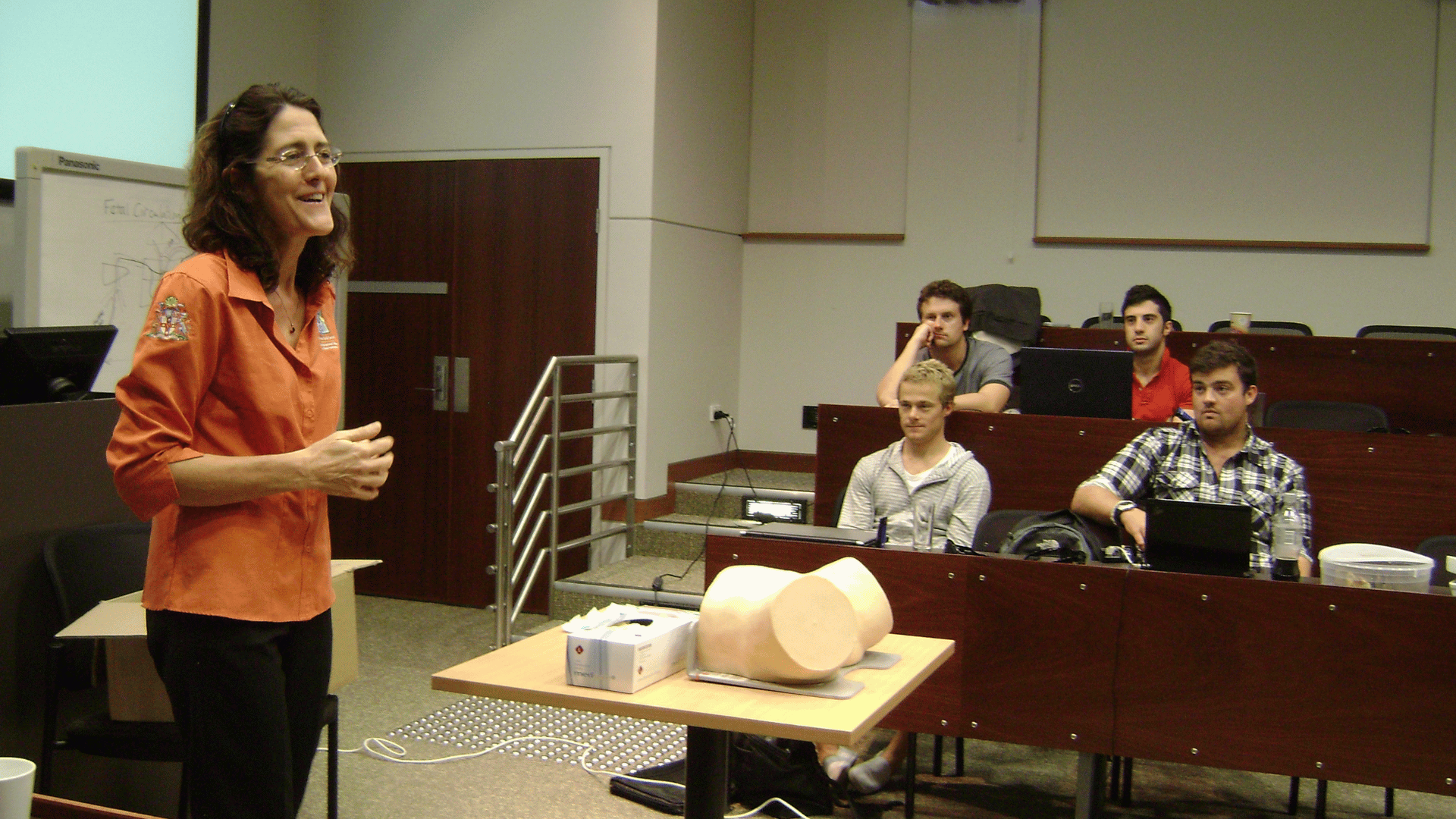
Teams travelled the region meeting local clinicians, sitting down over cups of tea and asking practices what they would need to take students. The answers helped shape everything that came next and the Northern Rivers quickly became a testing ground for new ideas.
If students needed experience with disability care, they spent time in community settings as well as hospitals. If they needed exposure to occupational health, they visited local workplaces. One memorable early excursion took students behind the scenes of a Byron Bay surfboard manufacturer, where they learned about the health impacts of airborne fibreglass before heading to the beach to learn how to surf themselves.
“The multi-university model gave us the opportunity to play around a lot more than a traditional program might, as everything could be negotiated between the Deans,” Sue says, “and ultimately that meant greater local input and influence.”
That creativity was backed by extraordinary community support.
“Everyone we spoke to was remarkably welcoming,” she recalls. “They each said yes, and then offered another great idea we could run with”
Businesses found part-time work for students. Locals offered to be tour guides. Clinicians taught for free.
“There was so much stuff that people were volunteering and donating,” Sue says.
The result was a program that offered students something difficult to find in larger centres: immersion. Students became part of the communities where they trained, learning alongside other health disciplines and gaining hands-on experience that often exceeded what was available in metropolitan settings.
For Sue, it came down to a simple mindset.
“We basically just had fun,” she says.
“Every time we heard about a [local challenge], we’d try and find a way of fixing it,” she says.
Twenty-five years and thousands of students later, the approach still holds true. Share ideas. Try something different. Trust the community to come with you.
