


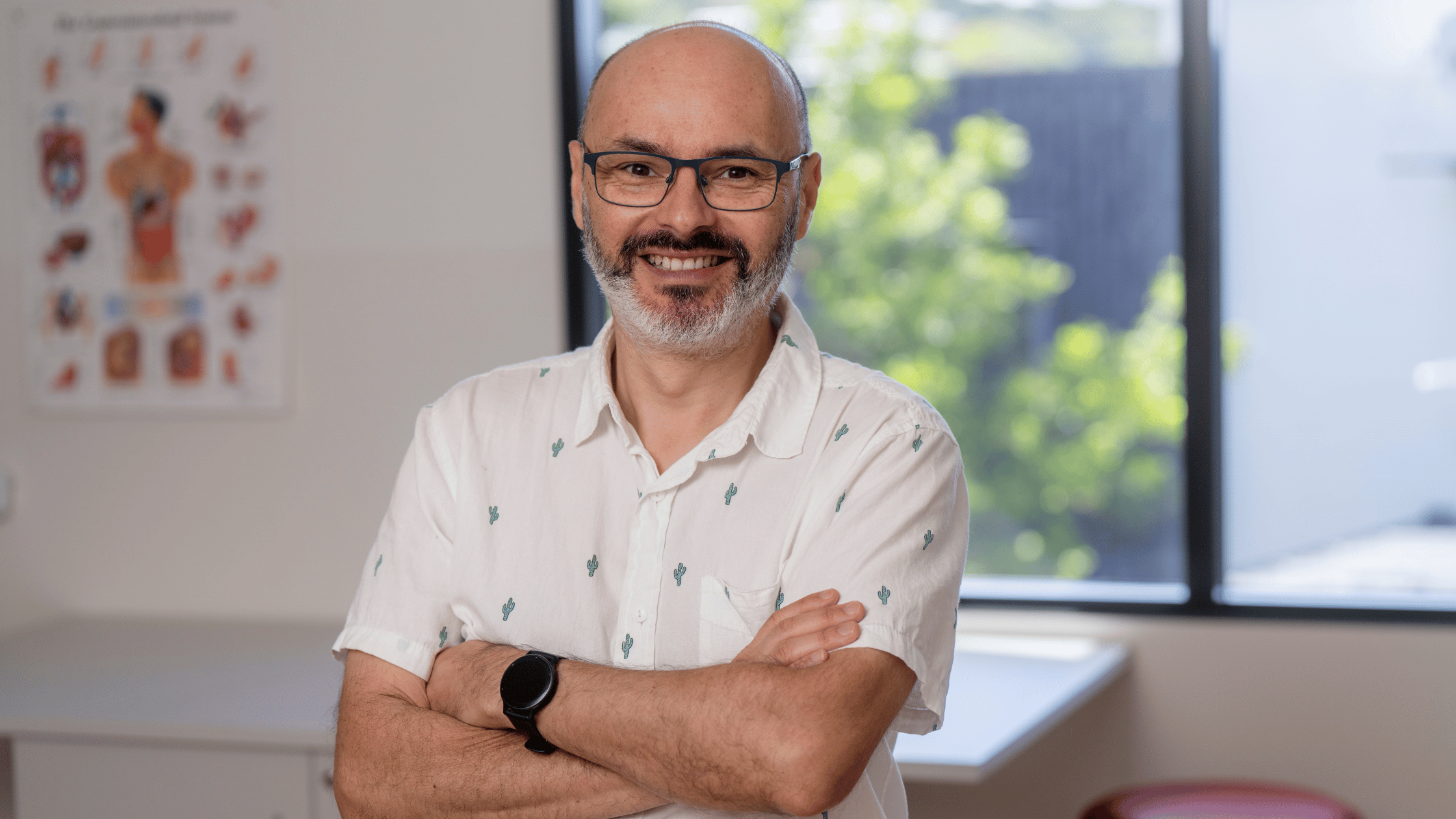
Meet Dr Cristian Leyton Moscoso
Research can feel daunting at the best of times. For medical students juggling busy workloads while on a rural placement, it can be especially challenging. At UCRH, Dr Cristian Leyton Moscoso is helping students find their footing – and often their confidence – as they take their first steps into research.
Cris describes research as “a fascinating and unique journey”, but one that can also be “a bumpy road, and things can go wrong at different stages, especially for novices”. Many students arrive with limited experience, or without a clear sense of how an idea becomes a project with real‑world impact. Supporting students through that uncertainty is central to Cris’ work.
Supporting students through the research journey
As UCRH MD Research Project Coordinator, Cris’ primary role is to support and mentor medical students undertaking research projects at UCRH. “I ensure that students complete their research milestones on time, even when working under tight deadlines,” he says. That support takes many forms, including drop‑in consultation sessions, workshops, and seminars on research methods and ethics.
Alongside this coordination role, Cris also supervises students through the entire research cycle, from developing an initial idea through to analysis and dissemination. His mentoring approach is deliberately practical and student‑centred. “My approach is to provide students with the best possible research experience by debunking the myth that research is inaccessible or overly complicated,” he explains. He focuses on teaching fundamentals in simple, engaging ways, often using clinical examples, while giving students the flexibility and independence to pursue topics aligned with their interests and skills.
Why rural research matters
The Northern Rivers setting plays a critical role in shaping student research at UCRH. Students explore questions that are directly relevant to local communities and health services, including the impacts of climate events, Aboriginal health, access to dementia diagnosis, and the evaluation of new models of care.
For many students, arriving in the region is eye‑opening. Cris notes that most are unaware of the scale and impact of recent catastrophic climate events until they engage directly with local communities. Conducting research on these issues often becomes deeply meaningful, helping students connect academic work with lived experience. Some students become so invested in their projects that they pursue publication or conference presentations, gaining a strong sense of pride and achievement.
Research with real‑world impact
Over time, Cris has seen student projects influence both local practice and broader conversations. Examples include research demonstrating reduced hospital length of stay following the introduction of specialist eating‑disorder services, and studies examining the effects of major flood events on mental health services in the Northern Rivers. Other projects have contributed to broader clinical fields, reinforcing that research conducted in regional centres can still have national and global impact.
Beyond technical skills, students gain a deeper understanding of health inequities between rural and metropolitan areas, particularly those affecting Aboriginal and Torres Strait Islander communities, people with disability, and individuals living with mental illness. Many also develop transferable skills in communication, critical thinking and time management that are essential in clinical practice.
Cris’ own research focus
Alongside his work with students, Cris is an active researcher in cognitive neurology and dementias. His research aims to improve early diagnosis and to better understand patterns of cognitive and functional decline across different dementia syndromes.
A key focus of his work has been progressive language disorders, which he describes as providing “a natural paradigm for exploring the relationship between language — a uniquely human capacity — and focal neurodegenerative processes”. His research has advanced understanding of logopenic progressive aphasia, an atypical presentation of Alzheimer’s disease, identifying specific linguistic markers and clarifying patterns of progression.
More recently, Cris has broadened his research to include other dementia syndromes, examining the influence of modifiable factors such as education and occupational attainment, and how executive functions interact with other cognitive domains to support everyday functioning. He also values research that produces findings with clear clinical relevance and has been involved in international collaborations, including time spent at Harvard and Massachusetts General Hospital.
Building confident, capable clinicians
For Cris, student research is about more than completing an assignment. It is about building confidence, curiosity and a sense of responsibility to communities. At UCRH, that blend of close mentoring, community partnership and locally grounded research is helping students turn questions into knowledge – and knowledge into impact.
