


For more than a decade, UCRH academics working in rural health research have collaborated with maternity services across NSW to address one of the most persistent and complex challenges in antenatal care: supporting pregnant women to quit smoking. As the MOHMQuit – Midwives and Obstetricians Helping Mothers to Quit Smoking – project wraps up, it provides a chance to reflect on rare, long-term insights into how systems-level change can improve care delivery and inform future policy and practice.
Why MOHMQuit matters
Smoking in pregnancy remains a significant yet preventable risk to babies and mothers, increasing the likelihood of stillbirth, preterm birth, low birth weight, and sudden infant death syndrome. Stopping smoking at any point during pregnancy improves health outcomes for both mother and baby, making this a significant public health issue, particularly in some rural and regional communities with relatively high rates of smoking in pregnancy.
When MOHMQuit commenced in 2014, there was growing recognition that individual-level advice was not being delivered consistently and, on its own, was not enough. NSW has had clear clinical guidance for two decades on identifying smoking in pregnancy and offering effective quit support, including Quitline referral and nicotine replacement therapy. Despite strong evidence that these approaches work, many pregnant women were not consistently receiving this support through routine antenatal care.
Midwives and obstetricians reported many barriers to delivering consistent, evidence-based smoking cessation care. Cessation support was often missed due to low prioritisation, limited system support, competing clinical priorities, and clinician confidence, time, concerns about rapport, and the perceived effectiveness of available quitting services.
MOHMQuit was developed in response to these realities, with a focus on embedding support within routine maternity services rather than relying on ad hoc interventions.
A collaborative, systems-based approach
MOHMQuit was developed through a long-term, collaborative program of research involving health system partners, policymakers, and frontline clinicians. Funded through an NHMRC partnership grant, the project brought together a team that included the NSW Ministry of Health, Cancer Council NSW, Cancer Institute NSW and the Northern NSW, Murrumbidgee, Nepean Blue Mountains, Western NSW and Illawarra Shoalhaven local health districts.
After early qualitative and quantitative studies, the team worked to co-design the MOHMQuit program as a sophisticated system-level intervention. It included components ranging from improvements to electronic medical record systems, practical workforce training, and sustainability measures such as local champions.
The implementation trial, which began in November 2020 used a stepped-wedge, cluster-randomised design. This ensured all participating sites received the intervention, while still allowing robust evaluation over the 32-month trial period.
A critical factor in helping to implement MOHMQuit was the close partnership with local investigators at each site. Maternity service leaders, most often senior midwives, were involved from the outset as active collaborators, not just site contacts. A key leader was Dr Cathy Adams, a senior midwife within the NSW Health system, who was instrumental in engaging maternity services and the NSW Ministry of Health from the early design phase and remained a critical co-lead throughout.
Cathy’s role, and that of many others on the ground, was central to preparing services for implementation, tailoring the intervention to local systems, supporting staff engagement, and embedding changes into routine practice.
What we wanted to achieve
MOHMQuit was designed to generate real-world evidence on both the effectiveness and cost-effectiveness of a systems-change approach to smoking cessation in pregnancy. Beyond outcomes, the research also aimed to understand how and why implementation succeeded or struggled.
This comprehensive process evaluation is integrated into the outputs from the research and is expected to inform future policy decisions and support potential scale-up beyond the trial sites. Several of the local health districts involved in the trial are keen to extend the program to their other maternity services, and options to achieve this are being explored.
Adapting to an unexpected shift
Over the life of the project, the context of smoking cessation changed significantly. When MOHMQuit began, e-cigarette use was rare. The rapid rise in vaping, including among pregnant women, introduced new clinical and public health challenges.
In response, the research team initiated additional work to better understand vaping in pregnancy, ensuring the project remained relevant in a shifting landscape. Additional studies supported by strong existing relationships with services and policymakers, focused on vaping during pregnancy and the postpartum period.
Reflecting on our work
As the project concludes, MOHMQuit stands as an example of sustained, collaborative rural health research that prioritises translation into practice. Team member Dr Larisa Barnes reflected on the importance of this long-term investment.
“This wasn’t quick work,” she said. “Many years of work led to MOHMQuit, and the project itself ran for more than five years, including the 32‑month trial. But that sustained effort is what creates real opportunities to change care, improve health trajectories, and make a meaningful difference on the ground for women and families.”
She also highlighted the broader systemic impact of the work:
“One of the biggest lessons for me has been that evidence alone doesn’t change practice – real change happens when researchers, clinicians, health system leaders, and the women who use these services are all heard,” she said.
“But that sustained effort is what creates real opportunities to make a meaningful difference on the ground for women and families.”
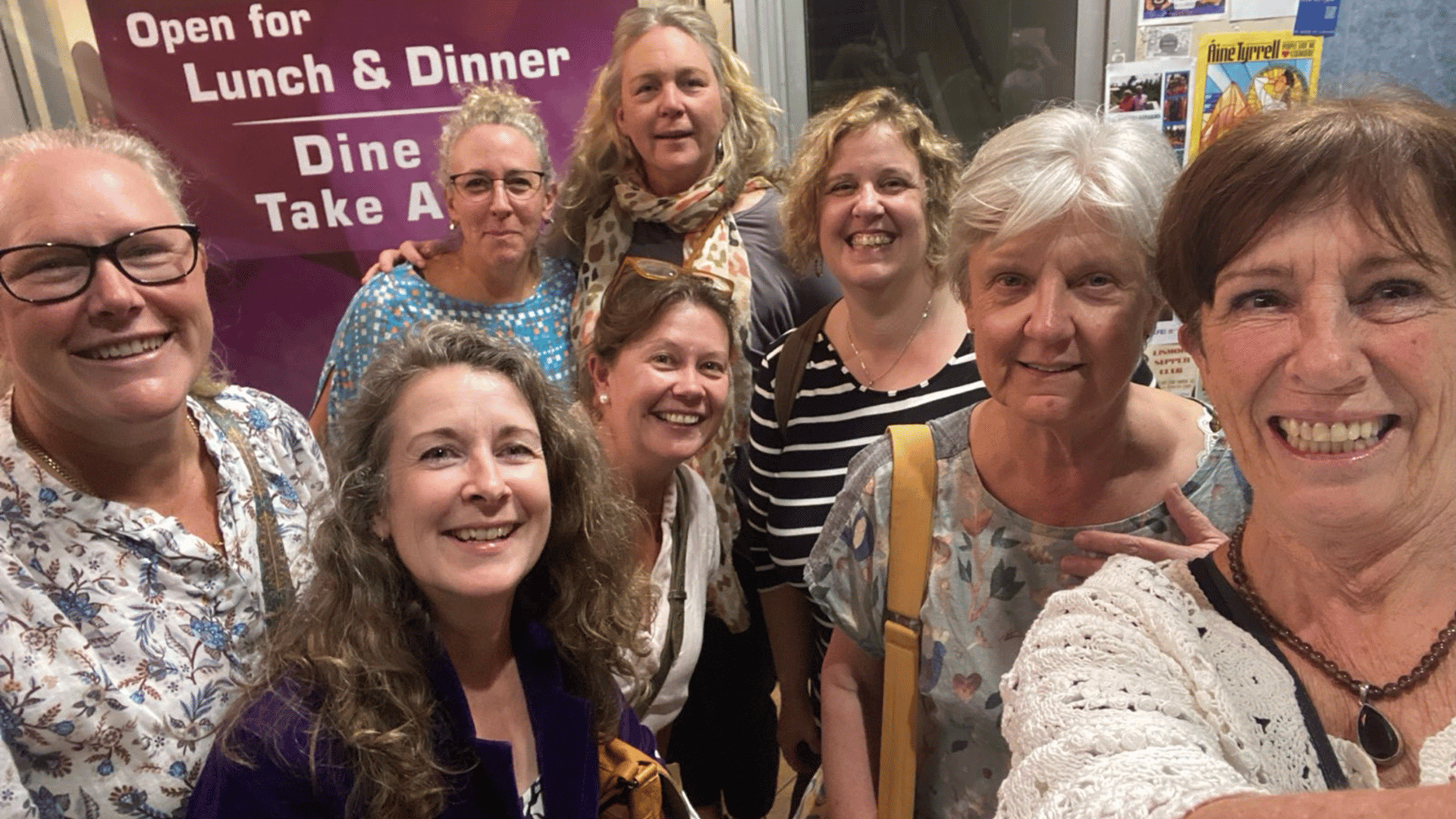
Pictured above, members of the MOHMQuit team gathered in Lismore recently to acknowledge the end of the project (L-R):
Research midwife Keltie Foster, Northern NSW Local Health District; UCRH’s Dr Jo Longman (front); Research midwife Vicki Gersh, Northern NSW Local Health District (back); partner investigator, Clinical Midwifery Consultant and MOHMQuit trainer Jacinta Felsch, Northern NSW Local Health District (back); Research midwife Simone Druitt, formerly Northern NSW Local Health District, now ISistaQuit (front); UCRH’s Dr Larisa Barnes; Chief Investigator and project lead Professor Megan Passey; and Associate Investigator and MOHMQuit trainer Dr Cathy Adams, formerly Clinical Excellence Commission, NSW Ministry of Health, now Northern NSW Local Health District.
