


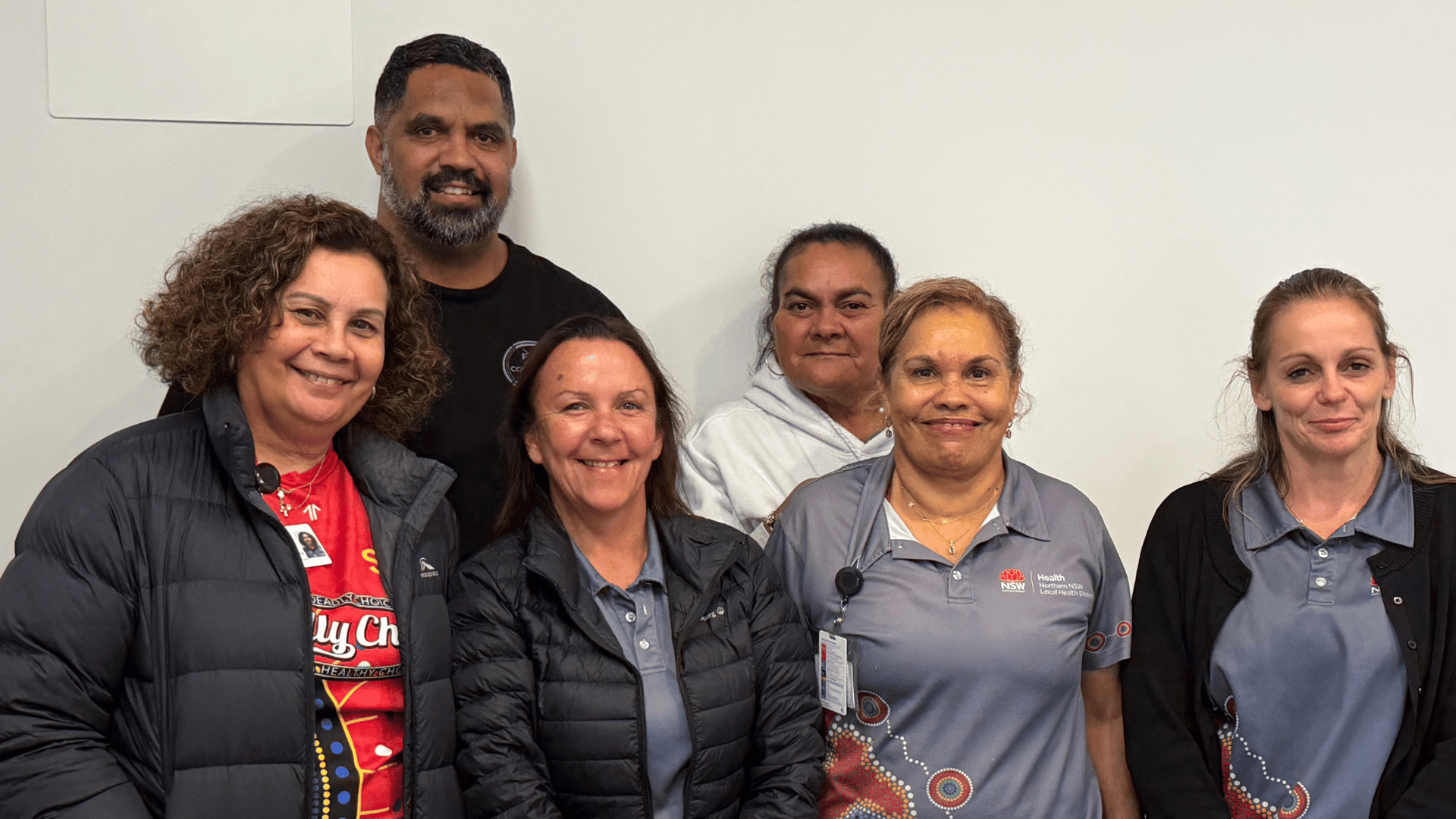
Supporting the rural health Australia workforce development of our region was front and centre during a series of Aboriginal Health Worker workshops that wrapped at our Simulation Centre in Lismore this week.
Run across four sessions, the program brought together Aboriginal Health Workers from across the Northern Rivers to build practical skills they can take straight back into their communities. The sessions covered everything from communication and kidney disease to mental health, trauma-informed care, paediatrics, cancer care and responding to emergencies.
What sets this annual series apart was how we build it each year. This year’s program was shaped with input from Local Health District teams and Aboriginal Medical Services, then delivered by clinicians, specialists and Aboriginal educators who understand the realities of working in community. It meant the training wasn’t abstract or theoretical. It was grounded in real situations, real conversations and real challenges.
For participants, that made a difference.
“All of it was beneficial… the presenters explained it so much easier and simpler that everybody could understand it, but also the way that community would be able to understand it as well,” one participant said.
Across the four sessions, there was also something less tangible, but just as important. Space.
Space to step away from busy roles. Space to reflect. Space to connect with others doing similar work. For some, that meant not just learning new skills, but feeling supported in the work they carry every day.
“I just love coming… it’s about absorbing information and getting to know certain areas, because we’re community-based and don’t always see what happens in other settings,” another participant said.
The workshops focused on building confidence, not just knowledge. Simple things like how to have a conversation, how to explain what’s happening to a patient, or how to respond in a tough moment can change how care is experienced on the ground.
That’s where this kind of training really lands. It doesn’t stay in the room.
It goes back into communities, into conversations, and into everyday moments of care.
Programs like this reflect how we work at UCRH by listening, partnering and responding. And most importantly, by supporting Aboriginal Health Workers to keep doing what they do best, caring for their mob and making a real difference where it matters most.
