


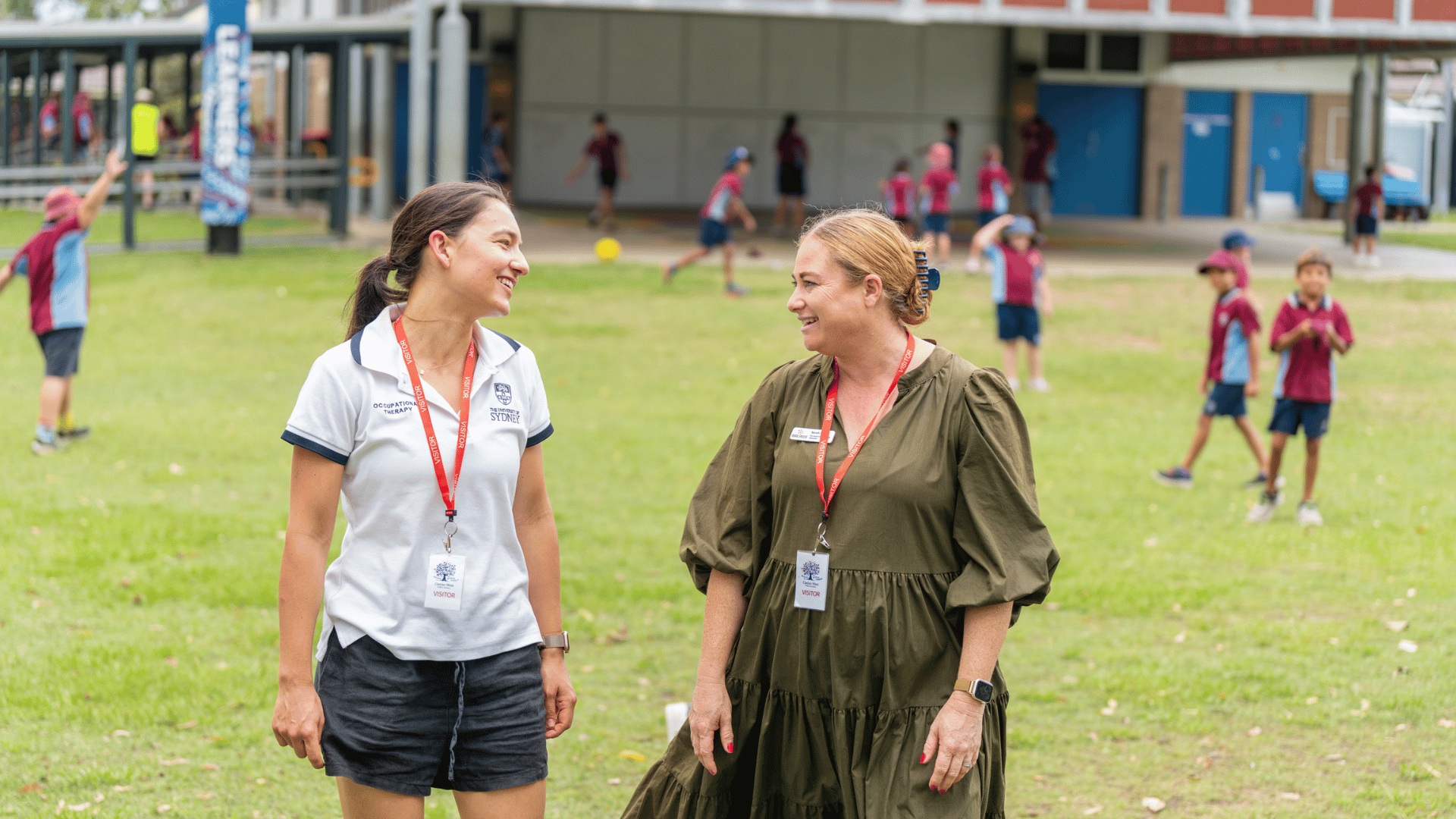
For UCRH Clinical Educator Sarah Crook, rural health was never meant to be a short stop on the way to somewhere else. It was something she encountered early in her career and quickly decided she wanted to stay connected to.
Her first taste of rural practice came through outreach work in Southern and Far Western New South Wales, delivering services to communities well beyond the city limits. “I loved travelling to these locations and it motivated me to consider life outside the city,” she says. That motivation became a reality in 2014, when she relocated to Northern New South Wales and, as she puts it, “haven’t looked back”.
Around the same time, Sarah began supervising Occupational Therapy (OT) students, initially while working for a large not‑for‑profit disability provider. Over the years, her role has evolved alongside her own professional development. She now brings not only clinical experience but also formal training in education to her work with students. Completing a teaching degree and a Graduate Certificate in Higher Education marked a significant shift, one she describes as moving from clinician to educator, and it changed how she approached placement design and student learning.
Today, Sarah designs and delivers Occupational Therapy student programs for UCRH. She works with undergraduate and masters students from multiple universities, most often in the final stages of their training, supporting them as they transition towards professional practice.
Her work spans both discipline‑specific and interprofessional learning. Alongside OT placements, Sarah supports collaborative practice opportunities for allied health students, helping them build the skills they need to work effectively in rural teams. Students are placed across the region in preschools, schools and aged care homes, embedding learning in real community settings.
Central to Sarah’s approach is a strong focus on relationships and student‑centred learning. She takes time to connect with students, understand their interests, and design experiences that feel meaningful and authentic. She also encourages students to lean into challenge and uncertainty. “I also support students to feel ‘okay’ with sitting in the uncomfortable space – being vulnerable, helping them to see that this is where they learn and grow,” she says.
Currently, much of Sarah’s work is based in preschools and schools, where students collaborate closely with education staff. Together, they identify priorities, deliver OT assessments and interventions, and provide resources to support children’s participation in school life. Without the student program, Sarah notes, many of these children would have no access to Occupational Therapy services at all.
Looking ahead, Sarah is hopeful but clear‑eyed about what needs to change. Addressing placement poverty is a priority if rural placements are to remain accessible for students. She would also like to see stronger collaboration across sectors such as health, education, disability and social services, with a focus on community‑led solutions.
For UCRH, her vision is ambitious and values‑driven. “I would love UCRH to be recognised as a change driver – an organisation where people think outside the box to support local solutions,” she says. From an education perspective, she hopes students will look back on their time with UCRH as “a transformational experience”, one that not only prepares them for the workforce but cements a lasting commitment to rural health.
