


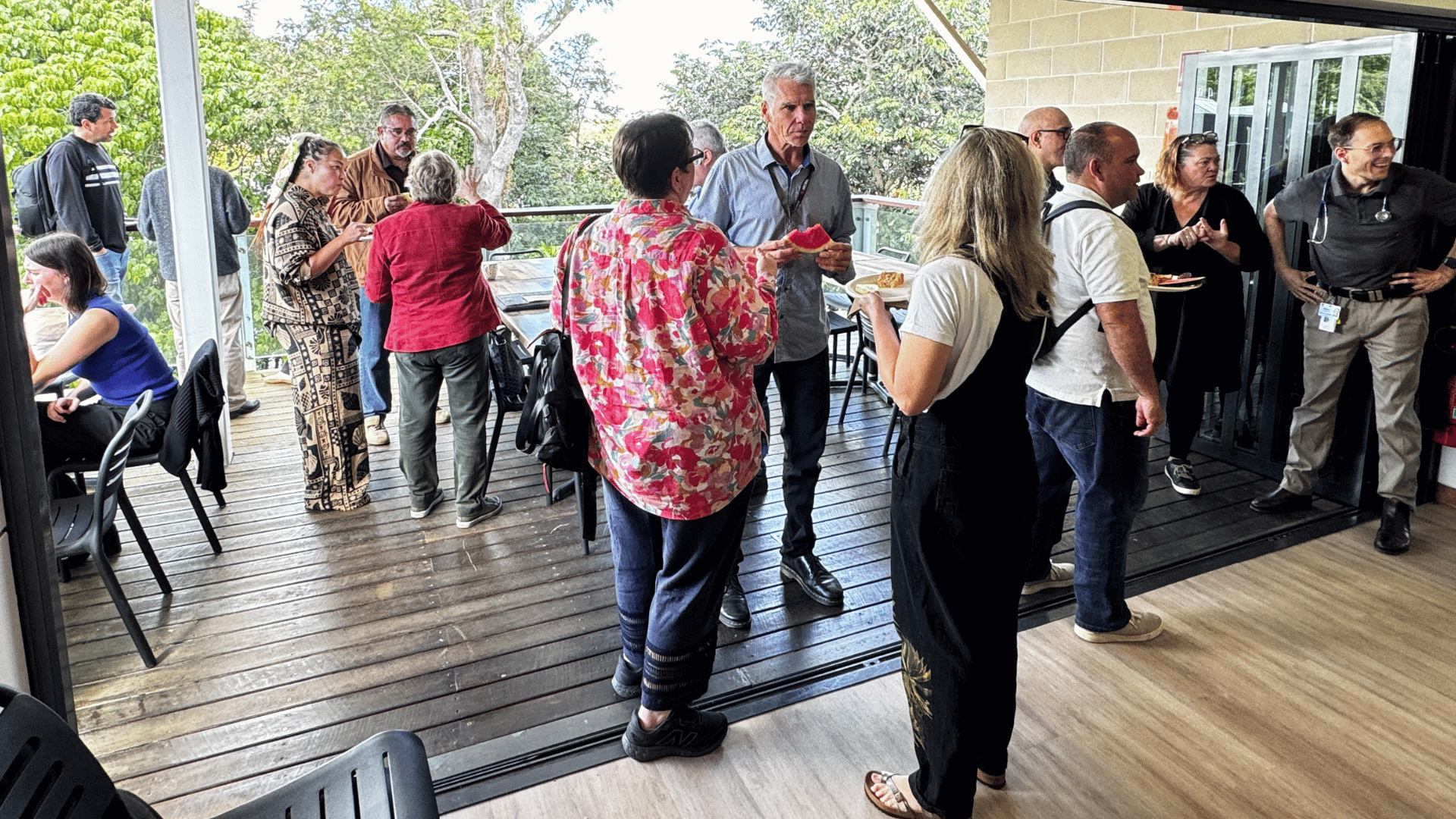
Aboriginal health research and education was front and centre yesterday as UCRH welcomed Professor Reuben Bolt, the University’s Deputy Vice-Chancellor, Indigenous Strategy and Services, and members of his portfolio for a visit to the Northern Rivers.
Joining Professor Bolt in visiting UCRH were Dr Michael Mossman, Pro Vice-Chancellor, Indigenous Strategy and Services; Jane Stanley, Director of the Gadigal Centre; and Professor Gabrielle Russell, Academic Director at the National Centre for Cultural Competence; as well as other members of his team.
During the visit, Professor Bolt spoke with UCRH staff about the University’s One Sydney, Many People strategy and recent initiatives designed to strengthen opportunities for Aboriginal and Torres Strait Islander students. Among them is the groundbreaking new MyGadigal Scholarship program, which will provide eligible Indigenous undergraduate students with financial support throughout their degree, alongside academic, personal and mentoring support.
The visit was also an opportunity to share how UCRH works with students, health services, communities and partners to support rural health education, research and workforce development across the region. It gave staff the chance to discuss some of the opportunities and challenges facing rural communities, and the important role universities can play in creating pathways into education and employment.
Members of the UCRH Aboriginal and Torres Strait Islander Caucus Not Caucus met with the delegation to talk about the work taking place across the organisation and the strong relationships UCRH has built within the Northern Rivers community. Conversations focused on creating culturally safe learning environments, supporting students and staff, and ensuring regional voices help shape the future of higher education.
The visit highlighted the shared commitment between UCRH and the University to improving access, opportunity and outcomes for Aboriginal and Torres Strait Islander people. It also reinforced the value of connecting University leaders with the people and places where that work is making a difference every day.
For UCRH staff, it was a welcome chance to showcase the breadth of work happening across the region and to contribute to discussions about the University’s future direction.
