


Community groups across the Northern Rivers continue to play a critical role in supporting mental health and wellbeing of communities in the wake of climate disasters, often responding quickly, creatively and with deep local knowledge.
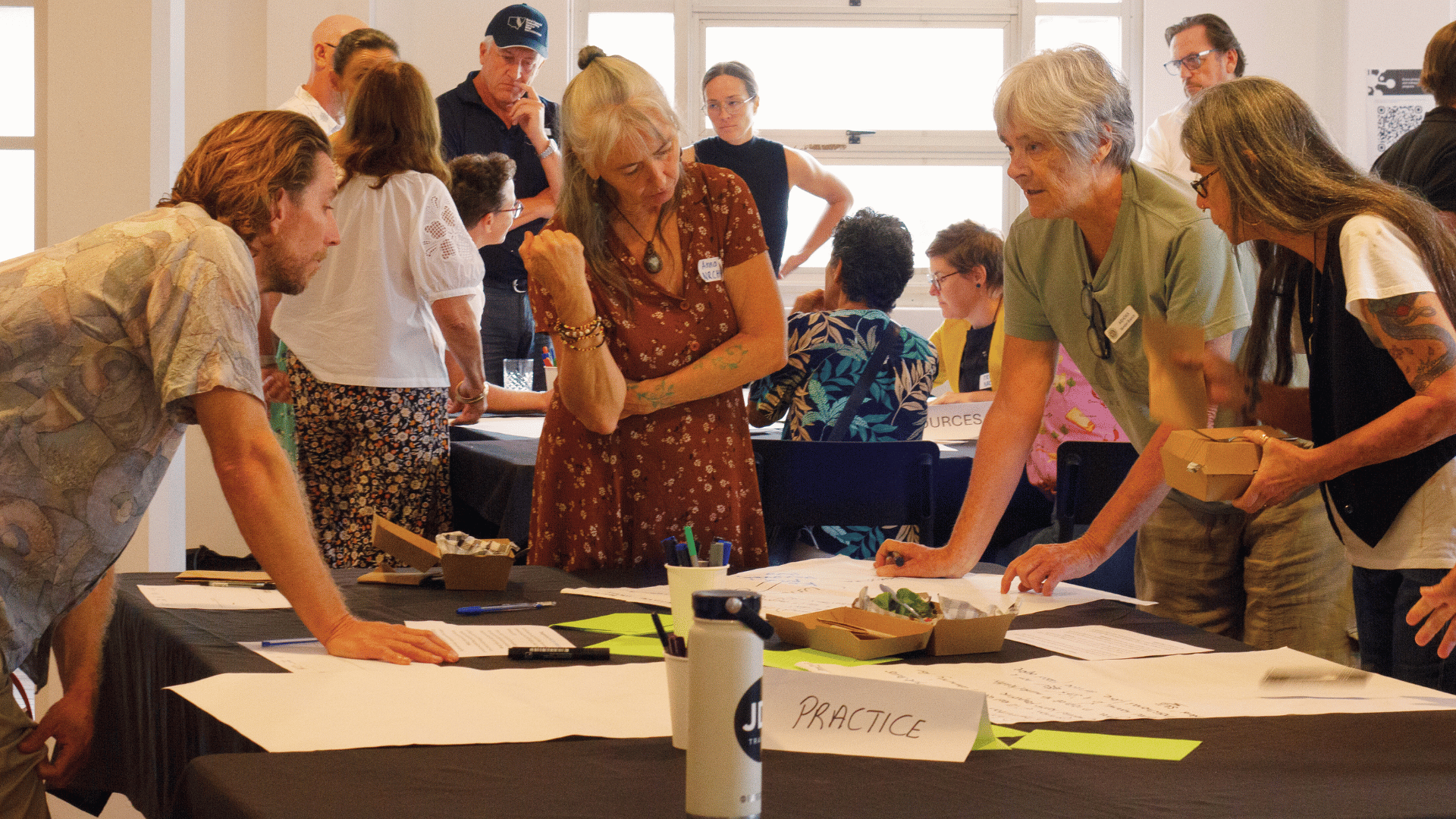
Recently UCRH hosted Supporting Community Wellbeing after Disasters, a learning event that brought together around 40 participants from community based resilience groups; not for profit organisations; government departments; universities and funding organisations to share experiences, practical strategies and lessons learned since the 2022 floods.
Held in Lismore at the Koori Mail, the event created space for honest conversation about what has supported community wellbeing, what remains challenging, and how community‑led responses can continue to be strengthened into the future.
Discussions throughout the session included: accessibility of support; continuity of care; training needs; leadership; the involvement of young people; wellbeing of family and community rather than a focus on the individual; building community; reframing mental health messaging; logistical challenges; the interface between the health system and community. Participants reflected on what has resonated most strongly in their own communities and where additional support or collaboration would be valuable.
The event also shared insights from recent research undertaken with four Northern Rivers community groups, exploring how grassroots organisations have supported wellbeing in the years following the floods.
“Community groups can provide unique and safe interactions, culturally and contextually, reducing the burden of access. They offer nurturing and healing spaces and activities which bring people together and help to build community and feelings of belonging”, said UCRH Researcher, Dr Rebecca McNaught.
Dr McNaught noted that “these place-based groups offer crucial long‑term support which goes beyond the immediate response and recovery services”
With funding support from a Peregrine Rural Mental Health Grant from NSW Health, the session brought together community groups alongside representatives from the research team: Northern NSW Local Health District Disaster Recovery Team, Northern Rivers Community Foundation, Plan C and UCRH, highlighting the value of cross‑sector collaboration in disaster recovery.
Participants discussed research on community-based mental health and wellbeing support, links between the formal health system and community groups, and how community groups can best be supported to provide this mental health and wellbeing care now and into the future in preparation for the next disaster.
Dr Jo Longman, who designed and implemented the research on which the workshop was based along with Dr McNaught, was delighted by the turnout to the workshop.
“We were so pleased at how deeply engaged participants were. It was a clear demonstration of their passion for supporting the wellbeing of community across the region,” she said.
While the event was focused on Northern Rivers‑based community groups, the learnings will inform broader conversations about how community wellbeing can be supported before, during and long after disasters in non-clinical settings.
A number of outputs capturing key insights from the research and the event discussions will be shared more widely in the coming months.
For UCRH, the session reinforced the importance of long‑term, place‑based engagement with community and institutional partners — and the value of creating spaces where local experience, research and collaboration come together to support wellbeing.
To learn more about this work or be notified when the learnings report is released, please contact [email protected]
