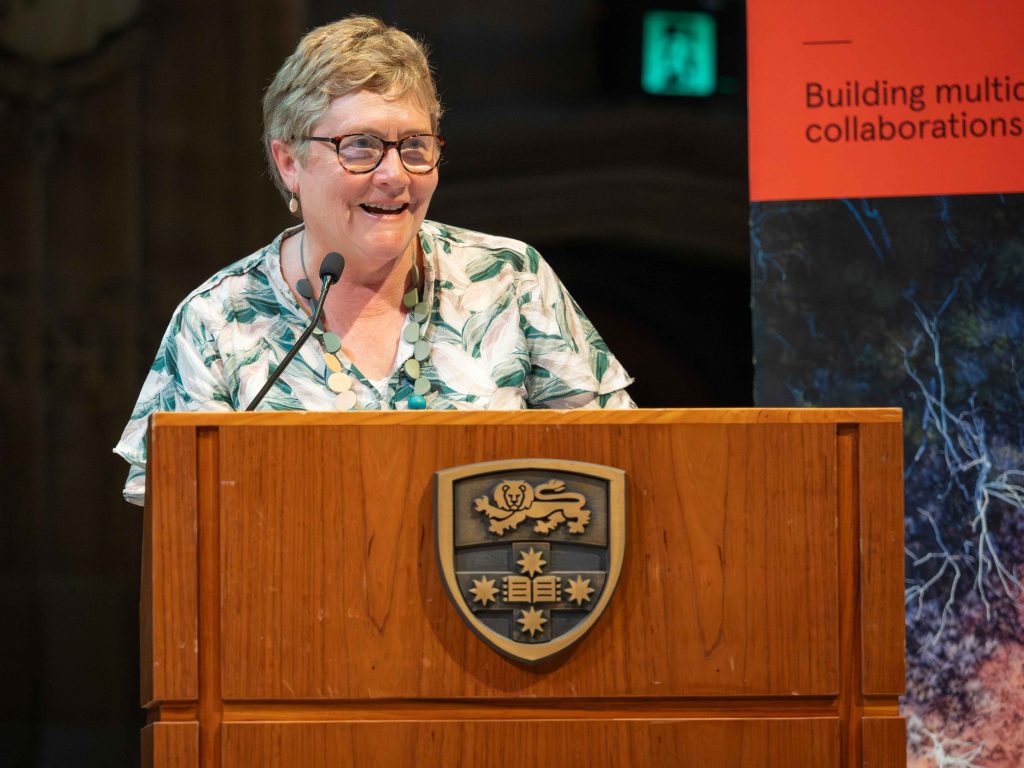
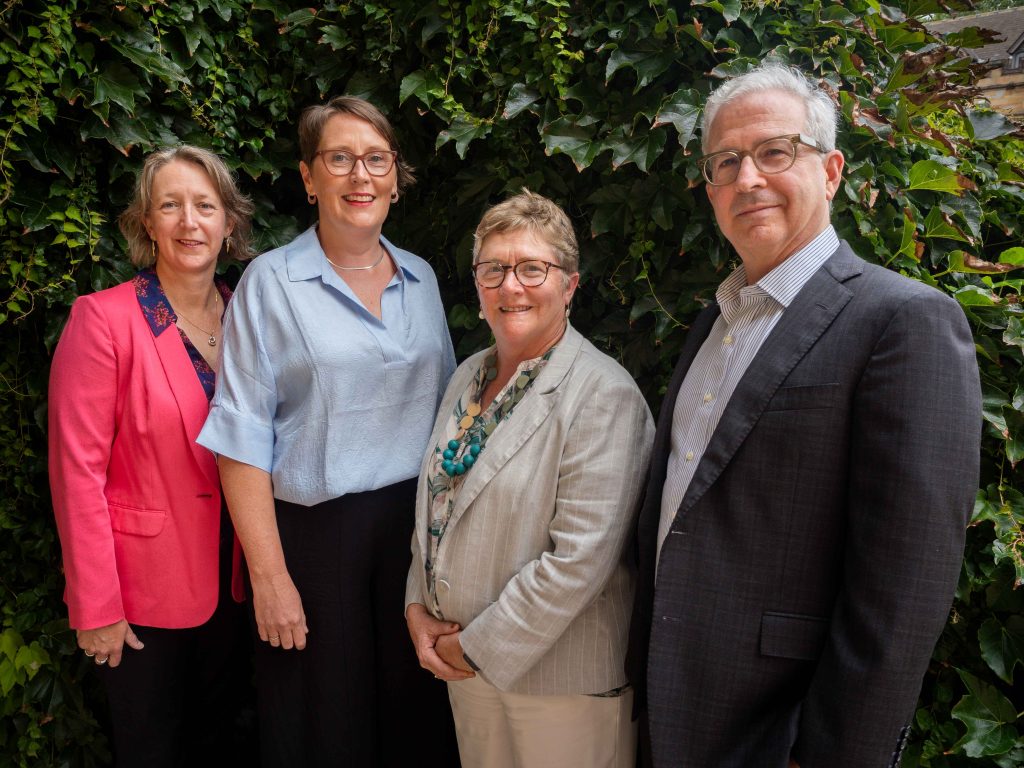
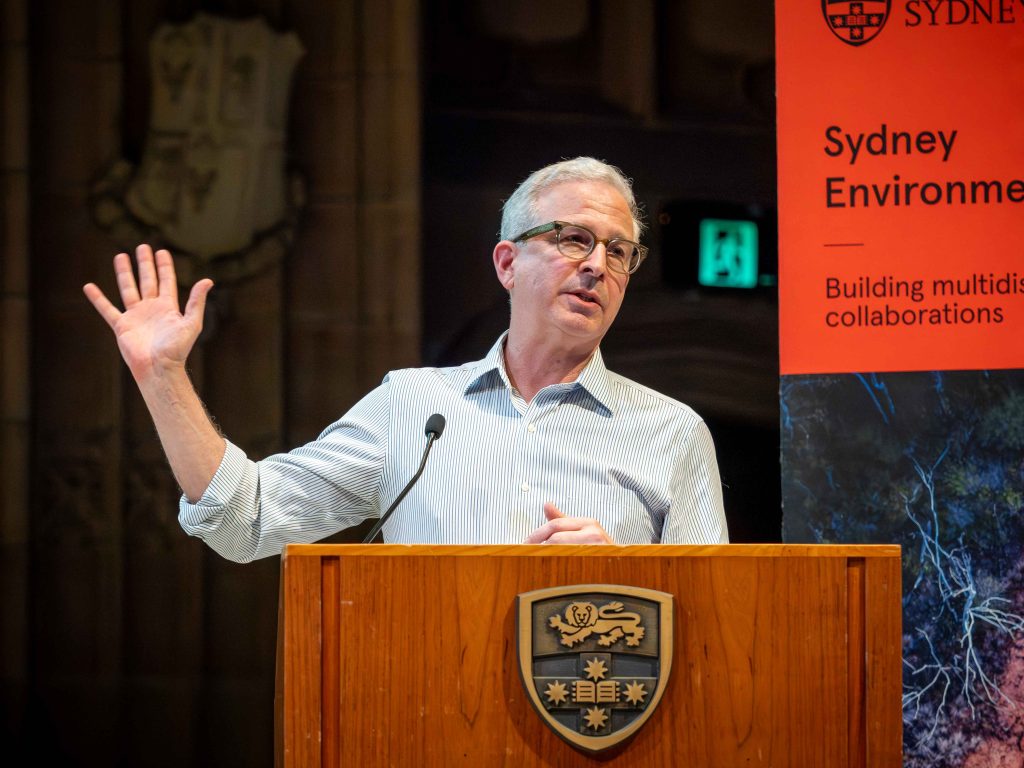
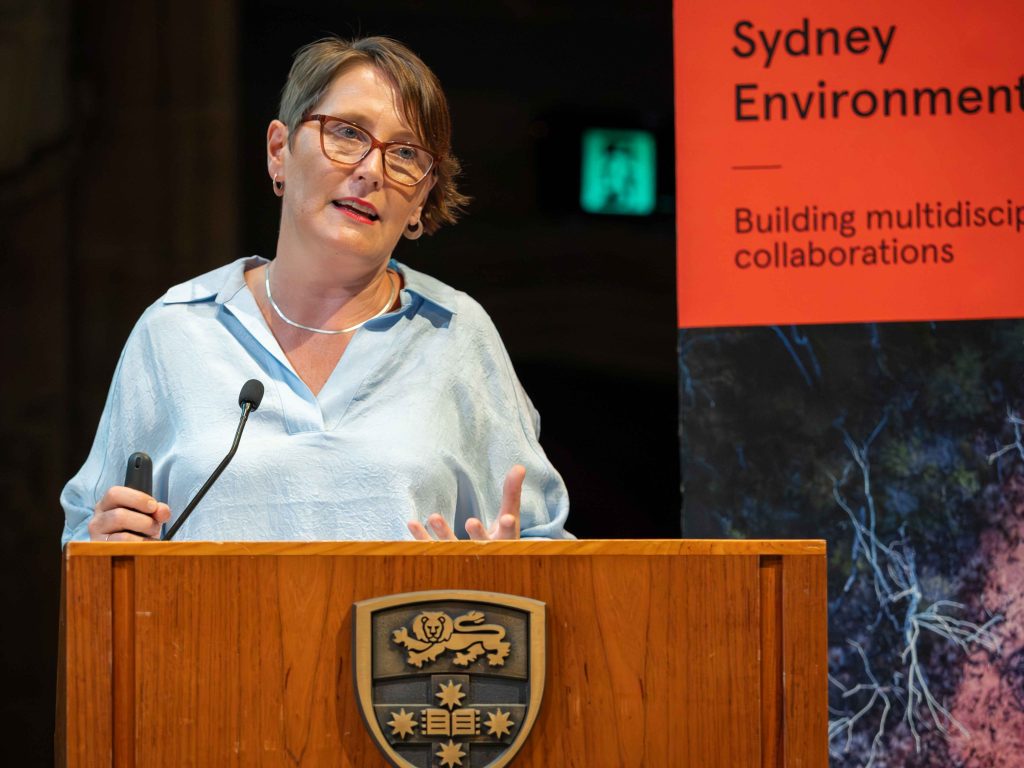
Being invited to deliver the Sydney Environment Institute’s Iain McCalman Lecture is a significant honour, reserved for scholars whose work is shaping national conversations on environment, society and public good.
This year, that invitation went to UCRH’s Research Fellow Dr Rebecca McNaught, recognising her leadership in community‑embedded research on climate change, disasters and wellbeing in rural Australia.
Presented in Sydney to an audience of researchers, policymakers and practitioners, Bec’s lecture, Communities in the era of compounding disasters, drew on lived experience, frontline research and years of partnership with Northern Rivers communities affected by floods, fires and cyclones.
“It is nice to feel supported,” she told the audience, reflecting on the invitation. “But more importantly, this lecture is an opportunity to amplify what communities already know and do, and to challenge how our systems respond to disasters.”
Bec lives and works in the Northern Rivers, a region already experiencing what she describes as “climate turbulence”, where disasters intersect, compound and leave long‑lasting social and health impacts. In her lecture, she explained that the idea of communities simply ‘recovering’ to a pre‑disaster state is becoming unrealistic.
“The fairytale idea of communities recovering after a disaster and reassuming their pre‑disaster state is becoming unobtainable,” she said.
“Disasters are occurring at a frequency and intensity that means they are intersecting and connecting.”
At the heart of the lecture was a powerful reframing of resilience, away from a top‑down emergency response model and towards recognising communities as essential actors, not passive recipients of help.
“We don’t need to direct and engage communities,” Bec said. “We need to mobilise and enable communities, seeing them as resources with local knowledge and skills that are essential to effective response and recovery.”
Drawing on UCRH’s embedded research approach, she shared findings from studies conducted alongside community resilience groups, women‑led recovery efforts and local organisations. This work highlights the critical but often invisible labour of women that sustains communities long after media attention fades.
“One female interviewee told us, ‘It was more than about food … people would just come and then we’d just hug them and they’d just cry … the food relief turned into something deeper,’” she said.
A central focus of the lecture was a clear set of calls to action for policymakers, funders, universities and disaster practitioners. These included anticipating and supporting community‑led mutual aid in disasters, investing in place‑based resilience rather than reactive recovery, and changing how research is done in disaster‑affected regions.
“At UCRH we have a ‘no survey without service’ approach,” Bec said.
“If you’re interested in rural research, come and visit us, have a cuppa, hear what our challenges are and let’s work together. This isn’t just an academic exercise. It’s an opportunity to make a real impact.”
She closed by reinforcing a message that resonates strongly with UCRH’s mission.
“Resilience is built by and with communities, not for them,” she said. “Moving from a reactive to proactive approach to disaster risk is no longer optional. In rural Australia, it is a matter of survival.”
For UCRH, Bec’s invitation to deliver the Iain McCalman Lecture is both a personal achievement and a recognition of the Centre’s commitment to research that is grounded in place, partnership and purpose, and that contributes to fairer, healthier futures for rural communities.
Listen to a recording of the Lecture here.
Read the full text of the Lecture here.
To learn more about Bec’s work, you can read about her work reviewing and improving community group support for the mental health and wellbeing of flood affected Northern Rivers communities, or her work on the Connecting for Impact project.