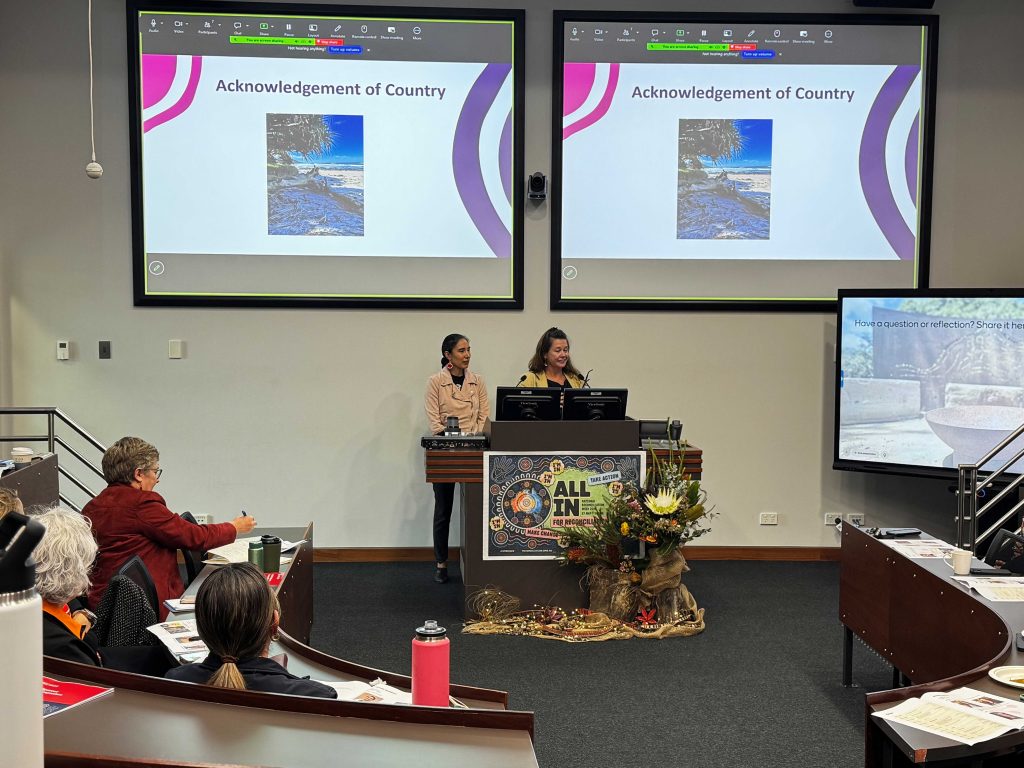
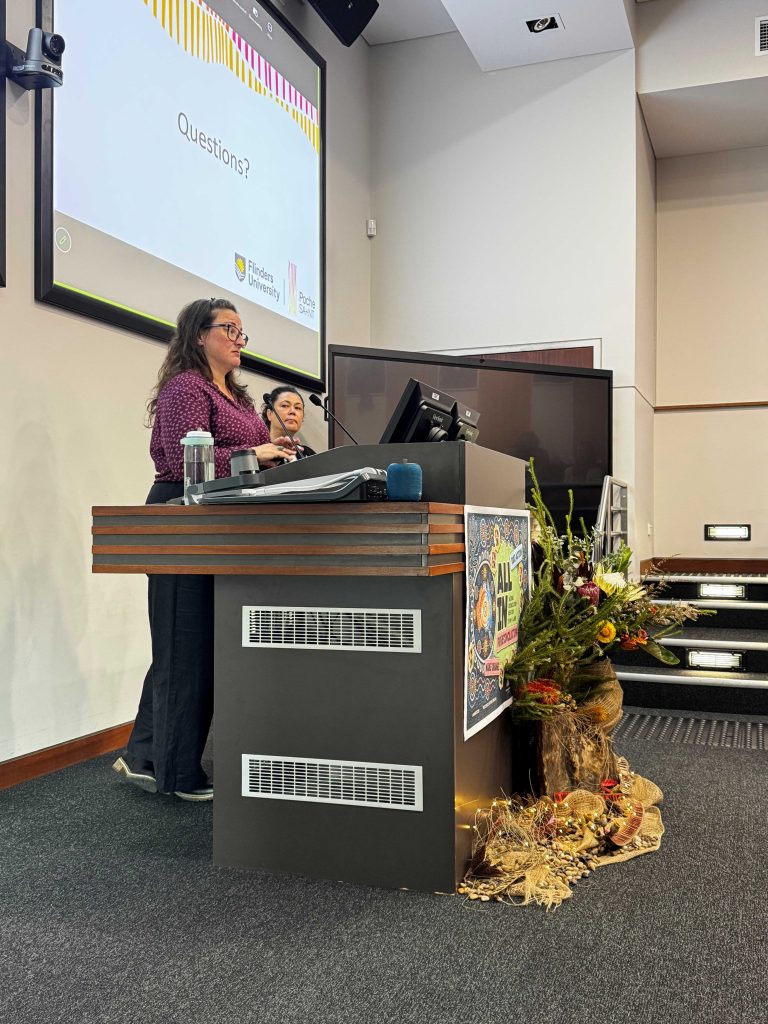
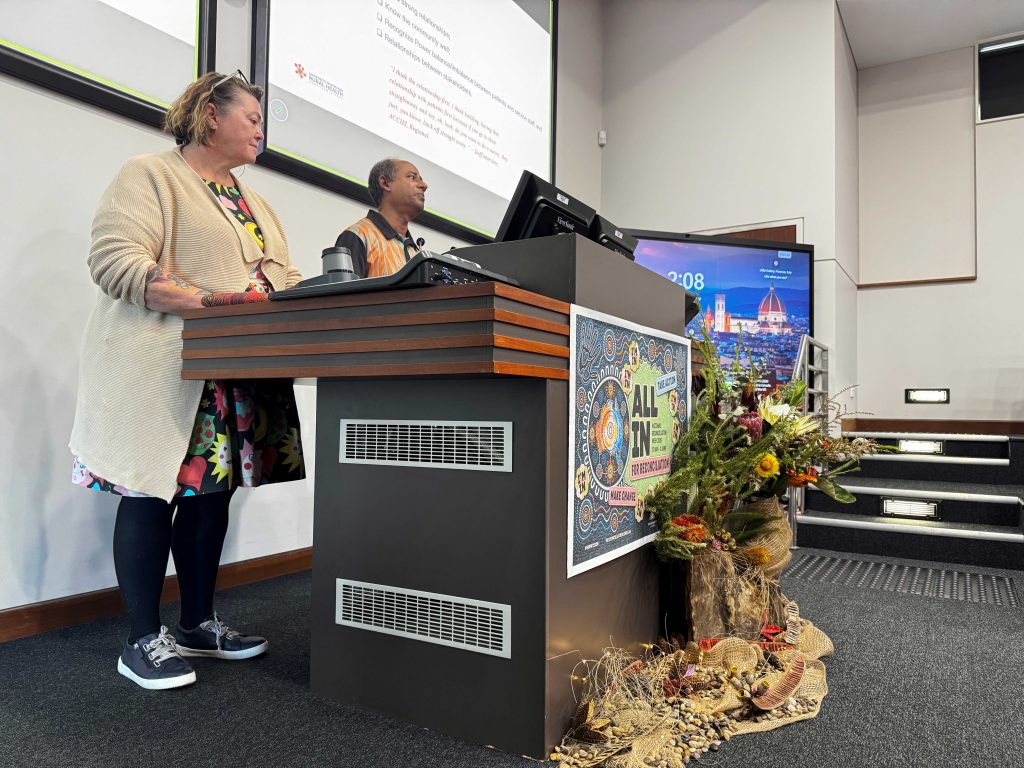
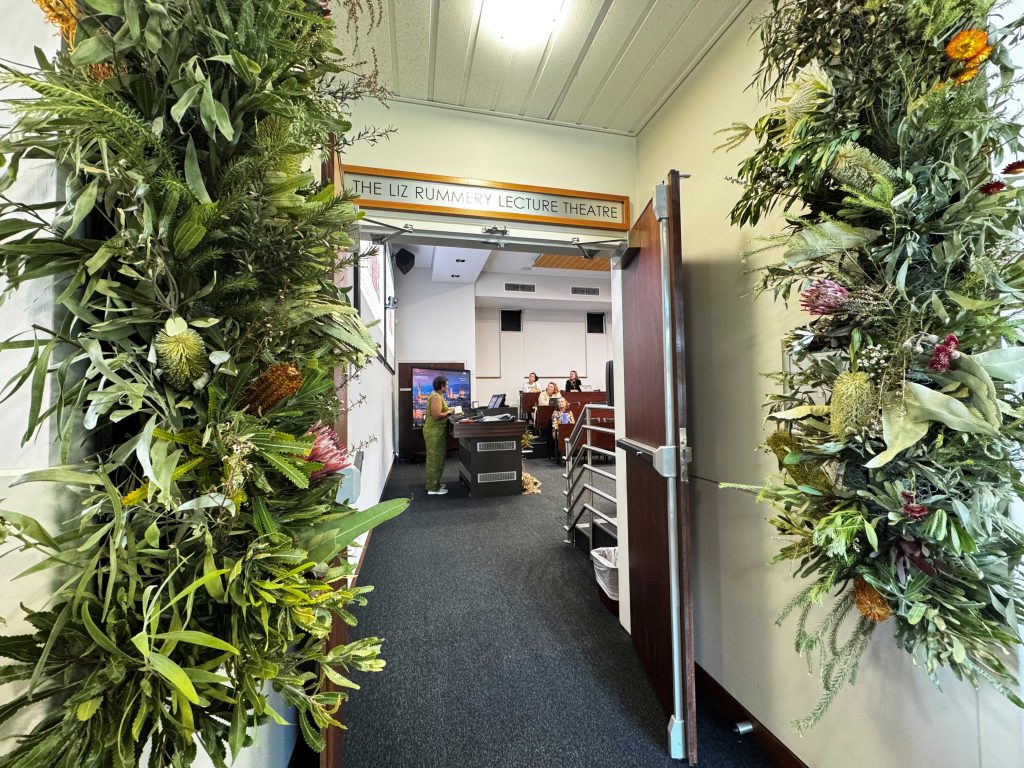
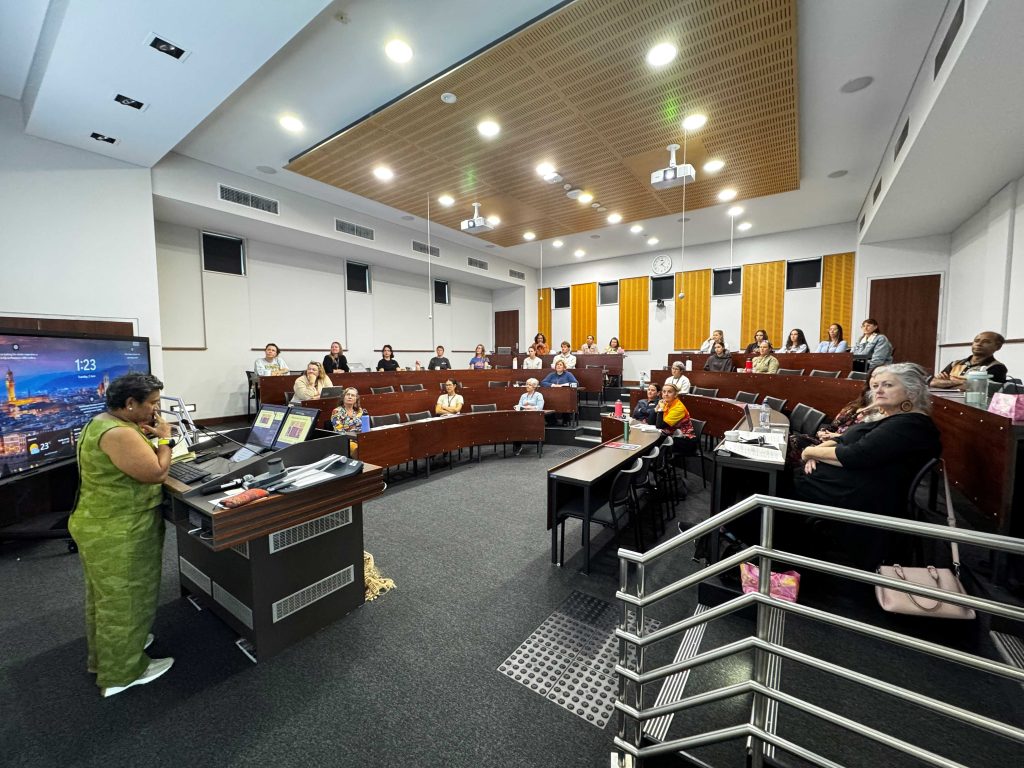
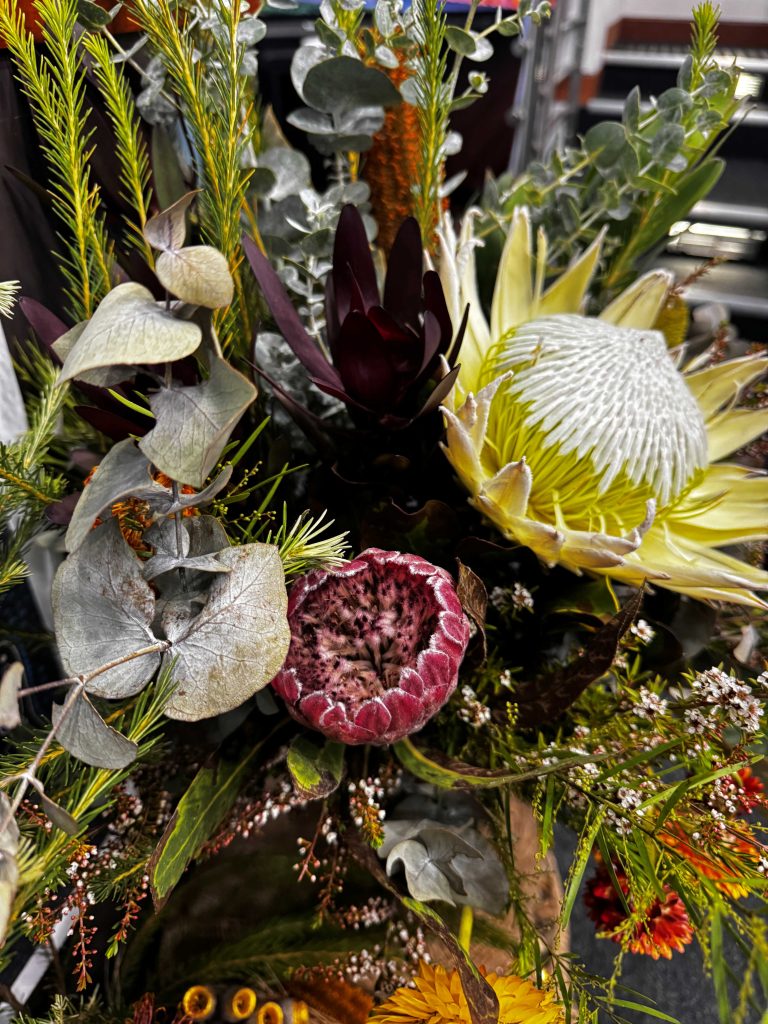
Last week UCRH brought people together for a powerful day of rural health research at the UCRH Indigenous Research Symposium, held during Reconciliation Week under the theme All In.
The event carried a clear message from the outset. Reconciliation is not a once a year moment, it is something we all need to show up for every day, in how we learn, work and care for community.
That idea runs through UCRH’s Aboriginal Health Education, which centres on listening, cultural respect and real-world practice. Days like this bring that approach to life, creating space for Aboriginal and Torres Strait Islander leadership, knowledge and lived experience to guide how health education and research are shaped.
The program moved through a strong line-up of presentations. Dr Jessica Dawson spoke abut the JilaHUB project, exploring culturally safe learning spaces for STEMM students and educators, while Jagun Alliance‘s Stevie Wappett highlighted the link between caring for Country and community wellbeing. A session on nurturing the next generation of researchers, presented by Professor Michelle Dickson, focused on strengthening systems to better support Indigenous-led work.
Culturally grounded care remained front and centre. Dr Gina La Hera Fuentes and Simone Druitt from SISTABIRTH shared work from the Birthing on Country project, followed by Molly Wardaguga‘s Professor Yvette Roe, who spoke about First Nations-led governance and health.
Our own Associate Professor Emma Walke and researcher Dr Amal Chakraborty presented on the VOICE project, focused on capturing consumer experience in health outcomes, and what is happening as the current phase of the project draws to a close.
The day closed with a presentation on food security, with speakers Caroline Deen, Simone Sheriff and Max Fabila, who addressed ways to measure what matters using cultural knowledge and lived experience. Finally, a panel discussed and reinforced a simple truth: real progress happens when people come together, listen and act.
As UCRH marks its 25th anniversary, the symposium reflects what has always mattered and what comes next, building a stronger, more culturally responsive health workforce.