


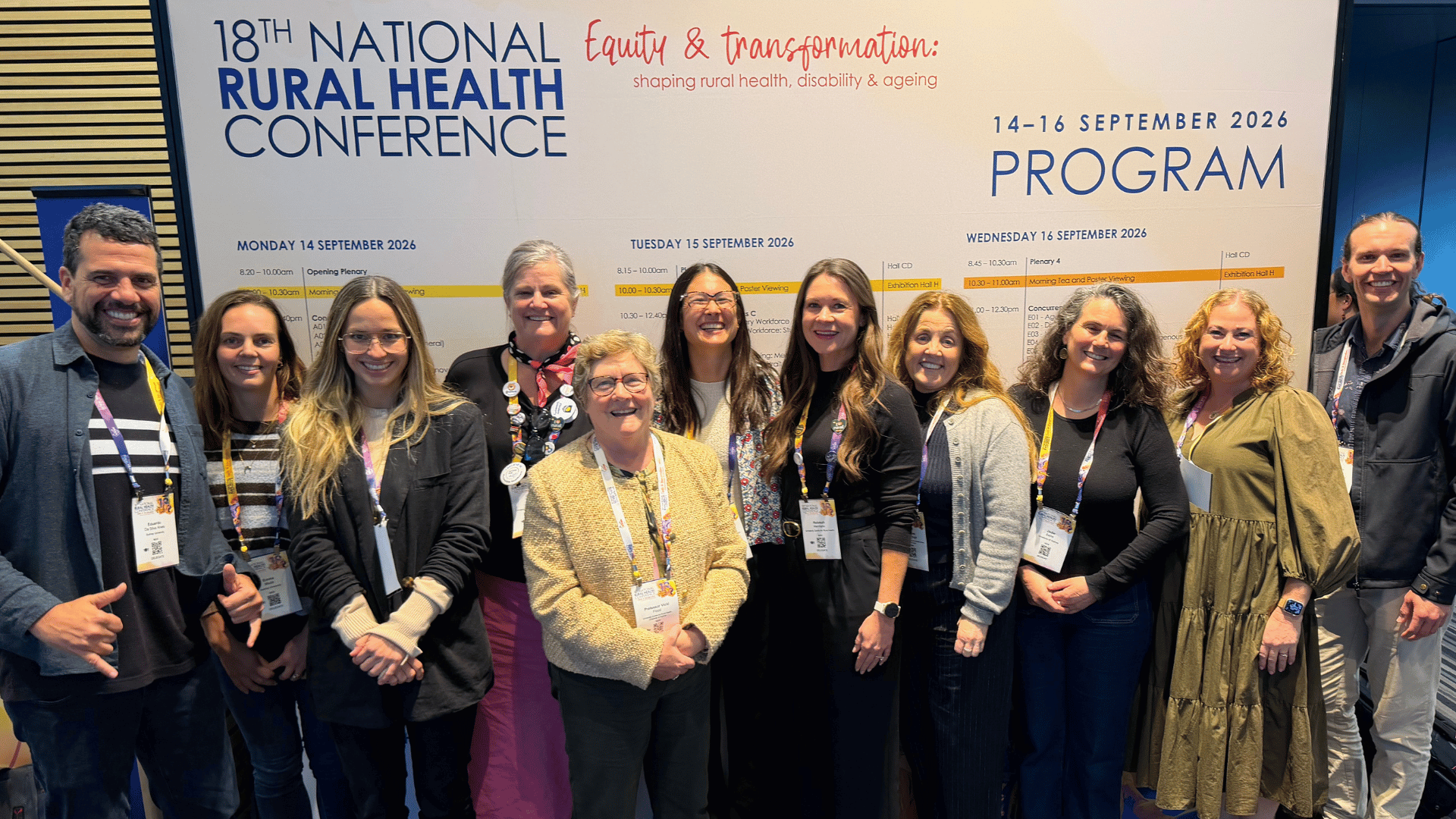
From improving emergency care to strengthening the rural health workforce, researchers from UCRH have been sharing their work and exchanging ideas at one of Australia’s major rural health gatherings.
The 18th National Rural Health Conference, held in Adelaide in September, brought together researchers, health professionals, policymakers and community representatives to explore challenges and opportunities in rural health.
UCRH researchers contributed multiple presentations covering integrated care, interprofessional education, rural research networks and the management of low back pain in rural emergency departments.
Frances Barraclough presented research exploring how integrated care can be embedded in health workforce training, while members of UCRH’s allied health team shared findings from an evaluation of interprofessional education during student placements in Northern NSW.
Dr Simon Davidson and Hayley Jorgenson discussed the development of the Rural Innovation, Support and Engagement (RISE) Researchers network, while Simon and Eduardo da Silva Alves also presented research examining care for people with low back pain in rural emergency departments.
For Simon, the conference offered valuable opportunities to share UCRH’s research and connect with colleagues working on similar challenges.
“How good is Radelaide!” he reflected, noting that alongside the presentations and networking, Adelaide also delivered some surprisingly good coffee, breakfast spots and running tracks!
Simon, Emma Mudd and Eduardo also met with leading pain researchers based in Adelaide to discuss research being led from UCRH and explore opportunities for future collaboration.
“Overall, it was a fantastic conference, and I can’t wait for the next one,” Simon said.
A particularly strong theme emerging from the conference was the importance of relationships and connection in rural healthcare.
Emma reflected on how meaningful relationships underpin effective healthcare, from the way patients engage with services to how rural health initiatives are developed.
Presentations on telehealth highlighted that giving patients genuine choice in how they access care can help them feel more empowered. Importantly, the quality of the relationship between patient and clinician often matters more than whether care is delivered face-to-face, by telephone or online.
Similar messages emerged around community partnerships and the rural health workforce, reinforcing the importance of trust, collaboration and understanding what matters to the people involved.
Eduardo also highlighted the value of learning from rural communities themselves, particularly the need for locally tailored solutions, meaningful community involvement and stronger rural research capacity.
Together, the team’s experiences reinforced that improving rural health is about more than developing new knowledge. It’s also about listening to communities, building lasting relationships and working together to turn research into better health outcomes.
Explore the 18th National Rural Health Conference program.
