


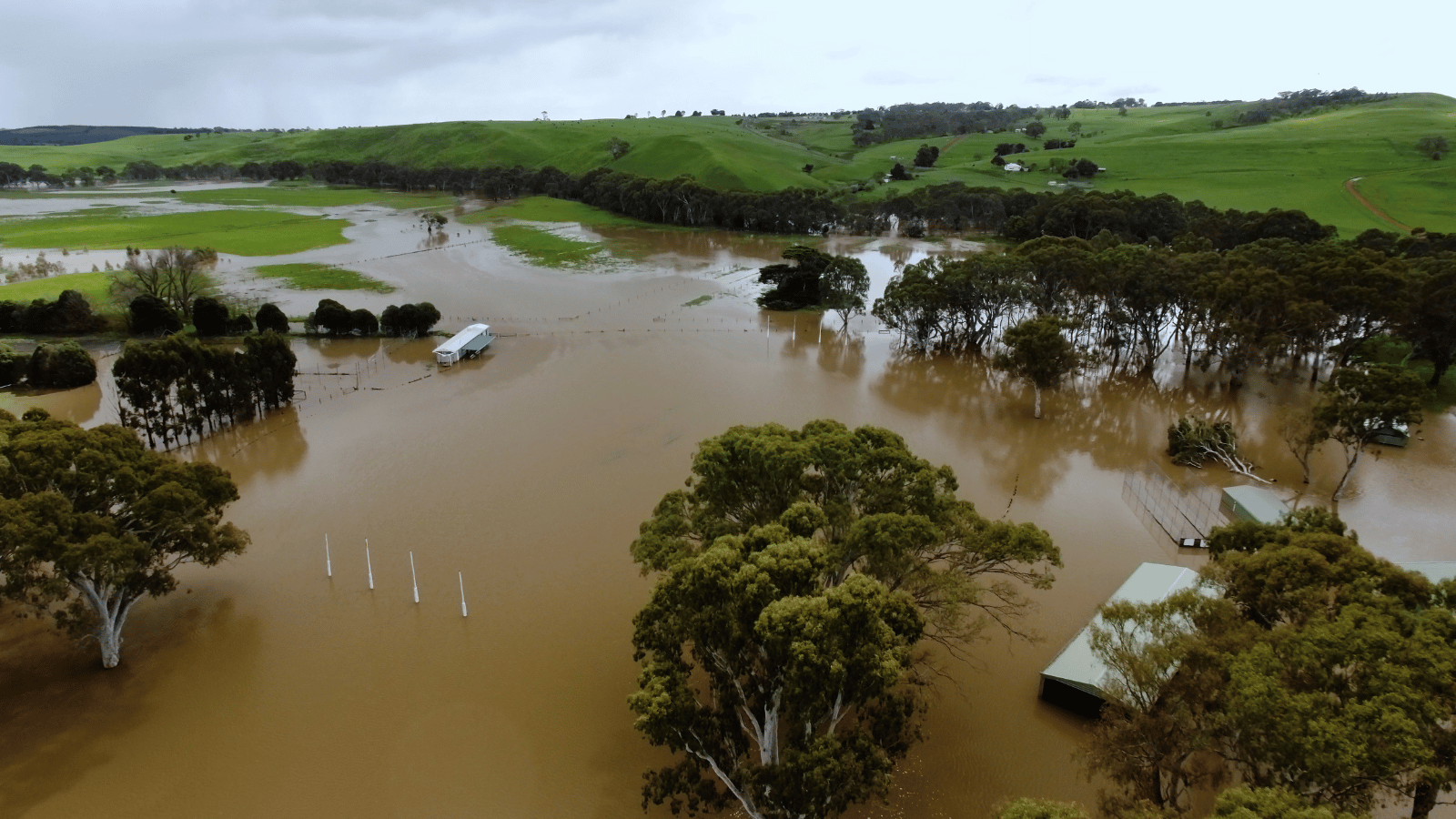
New rural health research is shedding light on what happens to our connections with each other when disasters keep hitting the same place.
Dr Rebecca McNaught from UCRH is a co-author on a new paper, alongside Dr Ang Li from the University of Melbourne, published in the International Journal of Disaster Risk Reduction. The article, Effects of cumulative exposures to climate-related disasters on social capital, looks at how repeated events like floods, bushfires and cyclones shape the way people support one another over time.
The study followed Australians from 2009 to 2019, comparing people who experienced disaster-related home damage with those who did not. It found that close personal ties, like support from family and close friends, can weaken after multiple disasters. This drop was even more noticeable for younger people, renters and communities already facing disadvantage.
At the same time, the research found that broader connections can grow. People were more likely to build links beyond their immediate circle, including ties with organisations and services, after repeated disasters. These wider networks can help people access support, but they do not fully replace the loss of close, trusted relationships.
The findings point to a growing challenge as climate change drives more frequent and overlapping disasters. Strong social connections are a key part of recovery, and when those connections are strained, communities may find it harder to bounce back.
This work highlights the need for practical strategies that strengthen both close relationships and wider support networks, especially in regions more exposed to repeated disasters.
