


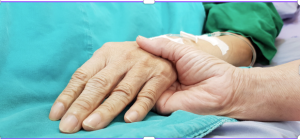
UCRH Multidisciplinary Education Program on Wednesday 13 May 2026
Session 1: Placement Debrief, Clinical Reasoning – Frances Barraclough, Senior Lecturer (Academic Coordinator Interdisciplinary Education)
When: 9:30AM – 10:30AM
https://uni-sydney.zoom.us/meeting/register/PeIyzIzrTwKlTkawkWs-vg
Session 2: End of Life Care Ingrid Hardy Palliative Care NP
When: 10:30AM – 11:30PM
https://uni-sydney.zoom.us/meeting/register/oZVOGfGxTXGTWcki8oFaew
Session 3: Stroke Pathophysiology and Management – Kim Hoffman Stroke Coordinator, Lismore Base Hospital
When: 11:30AM – 12:30PM
https://uni-sydney.zoom.us/meeting/register/FUtNFYXvSOyP6Ib831fJ-g
Session 4: Child welfare and wellbeing – Social Futures Family Referral Service Team
When: 1:30PM – 2:30PM
https://uni-sydney.zoom.us/meeting/register/ise2ajZlSSGWVAHBLb78VA
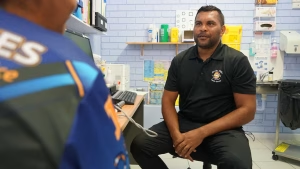
Aboriginal Health Worker Training
Join us for a culturally sensitive and community-focused training program designed specifically for Aboriginal Health Workers. This workshop aims to empower participants with practical knowledge, essential skills, and valuable resources to support improved health outcomes within their communities.
Delivered by our experienced Simulation Team in collaboration with key stakeholders, this interactive session focuses on building confidence and capability in key areas of practice, with an emphasis on culturally appropriate care.
Workshop Topics:
-
Communication
-
The Patient with Kidney Disease
This workshop provides a supportive learning environment and an opportunity to further develop skills that make a meaningful difference in community health and wellbeing.
For more information or to register, please visit our website or contact the Simulation Team.
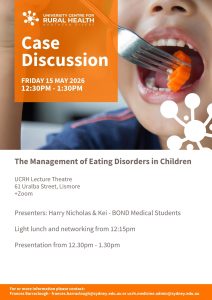
UCRH Student Led Case Discussion on Friday 15 May 2026
Light lunch and networking from 12:15pm
Case Discussion: The Management of Eating Disorders in Children
When: 12:30PM – 1:30PM
Aboriginal Health Worker Training
Join us for a culturally sensitive and community-focused training program designed specifically for Aboriginal Health Workers. This workshop aims to empower participants with practical knowledge, essential skills, and valuable resources to support improved health outcomes within their communities.
Delivered by our experienced Simulation Team in collaboration with key stakeholders, this interactive session focuses on building confidence and capability in key areas of practice, with an emphasis on culturally appropriate care.
Workshop Topics:
-
Mental Health Basics
-
Trauma Informed Care
This workshop provides a supportive learning environment and an opportunity to further develop skills that make a meaningful difference in community health and wellbeing.
For more information or to register, please visit our website or contact the Simulation Team.
Aboriginal Health Worker Training
Join us for a culturally sensitive and community-focused training program designed specifically for Aboriginal Health Workers. This workshop aims to empower participants with practical knowledge, essential skills, and valuable resources to support improved health outcomes within their communities.
Delivered by our experienced Simulation Team in collaboration with key stakeholders, this interactive session focuses on building confidence and capability in key areas of practice, with an emphasis on culturally appropriate care.
Workshop Topics:
-
The Paediatric Patient
-
The Patient on the Cancer Journey
This workshop provides a supportive learning environment and an opportunity to further develop skills that make a meaningful difference in community health and wellbeing.
For more information or to register, please visit our website or contact the Simulation Team.
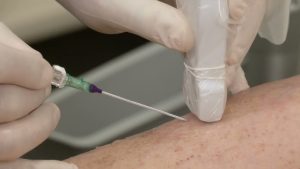
The Ultrasound Vascular Access Workshop is a practical, hands-on training program designed for healthcare professionals who want to improve their skills and confidence in ultrasound-guided venous cannulation.
This workshop focuses on using ultrasound to accurately identify and access peripheral veins, improving first-attempt success rates, reducing patient discomfort, and enhancing overall procedural safety. Participants will gain a solid understanding of ultrasound principles and how to apply them effectively in clinical practice.
Course content includes key anatomy and physiology relevant to vascular access, fundamentals of ultrasound imaging, vein assessment and selection, and appropriate equipment and device choices. Learning is reinforced through structured, hands-on practice using simulation models in a supportive environment.
Guided by experienced instructors, participants will practise probe handling, vein identification, and ultrasound-guided cannulation techniques with real-time feedback to build confidence and competence.
This workshop is ideal for clinicians who regularly perform venous access and want to improve accuracy, efficiency, and patient outcomes through the use of ultrasound technology in everyday practice.
Aboriginal Health Worker Training
Join us for a culturally sensitive and community-focused training program designed specifically for Aboriginal Health Workers. This workshop aims to empower participants with practical knowledge, essential skills, and valuable resources to support improved health outcomes within their communities.
Delivered by our experienced Simulation Team in collaboration with key stakeholders, this interactive session focuses on building confidence and capability in key areas of practice, with an emphasis on culturally appropriate care.
Workshop Topics:
-
Emergencies in the Community
-
Tying it all together!
This workshop provides a supportive learning environment and an opportunity to further develop skills that make a meaningful difference in community health and wellbeing.
For more information or to register, please visit our website or contact the Simulation Team.
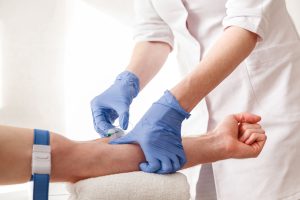
Boost your clinical skills and confidence with this practical, hands-on cannulation and venepuncture training. This course combines essential theoretical knowledge with guided practice, helping you develop the techniques and safety skills needed to perform these procedures effectively.
During the session, you will:
Learn key techniques for safe and accurate cannulation and venepuncture
Understand important clinical considerations and safety principles
Participate in guided hands-on practice to build real confidence and competence
By the end of the course, you will be able to perform both procedures safely and confidently, applying your skills in a variety of clinical settings. This training is designed to enhance your professional development, support high-quality patient care, and improve clinical outcomes.
Boost your clinical skills and confidence with this practical, hands-on cannulation and venepuncture training. This course combines essential theoretical knowledge with guided practice, helping you develop the techniques and safety skills needed to perform these procedures effectively.
During the session, you will:
Learn key techniques for safe and accurate cannulation and venepuncture
Understand important clinical considerations and safety principles
Participate in guided hands-on practice to build real confidence and competence
By the end of the course, you will be able to perform both procedures safely and confidently, applying your skills in a variety of clinical settings. This training is designed to enhance your professional development, support high-quality patient care, and improve clinical outcomes.
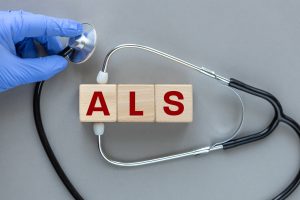
Advanced Life Support (ALS) Courses – ACCCN Accredited
The Australian College of Critical Care Nurses (ACCCN), a member organisation of the Australian Resuscitation Council (ARC), accredits our Advanced Life Support (ALS) programs. These courses offer high-quality education in Adult, Paediatric and Instructor-level resuscitation.
The ACCCN National Advanced Life Support Education program provides practical, evidence-based training for healthcare professionals, including nursing, medical and defence force staff. It suits clinicians who work in critical care environments or who regularly care for critically ill patients.
Because the program builds on existing ALS knowledge, participants should already be familiar with core ALS practices. During the course, you will develop the skills and confidence to lead an ALS team effectively. Before enrolling, please review the ACCCN ALS Team Leader Assessment Criteria to understand the expectations and assessment requirements (download here).
Moreover, all content aligns with current recommendations from ANZCOR, the Australian Resuscitation Council (ARC) and the International Liaison Committee on Resuscitation (ILCOR), ensuring each course reflects the latest evidence and best practice.
Continuing Professional Development (CPD)
Nurses: Every ACCCN ALS course counts toward CPD hours.
Medical Officers: Courses carry CPD endorsement from:
Australian College of Rural & Remote Medicine (ACRRM)
Australian College of Emergency Medicine (ACEM)
Australian and New Zealand College of Anaesthetists (ANZCA)
College of Intensive Care Medicine (CICM)
The Royal Australian College of General Practitioners (RACGP)
The Royal Australasian College of Physicians (RACP)
ACCCN encourages clinicians to complete annual re-certification for both Adult and Paediatric ALS programs. In addition, all participants receive access to an interactive program manual and a range of online learning resources to support their preparation and ongoing development.
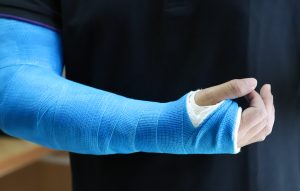
The Ultrasound Vascular Access Workshop is a practical, hands-on training program designed for healthcare professionals who want to improve their skills and confidence in ultrasound-guided venous cannulation.
This workshop focuses on using ultrasound to accurately identify and access peripheral veins, improving first-attempt success rates, reducing patient discomfort, and enhancing overall procedural safety. Participants will gain a solid understanding of ultrasound principles and how to apply them effectively in clinical practice.
Course content includes key anatomy and physiology relevant to vascular access, fundamentals of ultrasound imaging, vein assessment and selection, and appropriate equipment and device choices. Learning is reinforced through structured, hands-on practice using simulation models in a supportive environment.
Guided by experienced instructors, participants will practise probe handling, vein identification, and ultrasound-guided cannulation techniques with real-time feedback to build confidence and competence.
This workshop is ideal for clinicians who regularly perform venous access and want to improve accuracy, efficiency, and patient outcomes through the use of ultrasound technology in everyday practice.
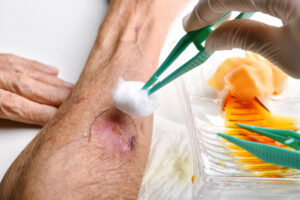
This practical workshop helps clinicians build strong and confident skills in wound assessment and management. You will learn how to assess skin integrity, understand each stage of the wound healing process, and recognise the intrinsic and extrinsic factors that affect healing. We also cover clear and accurate documentation, and how to classify pressure injuries and IAD in a clinical setting. The session also introduces compression therapy, dressing selection, and the basics of NPWT.
You will take part in a range of hands-on activities throughout the workshop. These include identifying different wound types, choosing and applying the right dressings, practising safe debridement, and applying effective compression. Each activity supports real-world clinical practice and helps you feel more confident with everyday wound care.
We run this workshop in collaboration with Far North Coast Wound Services.
Advanced Life Support (ALS) Courses – ACCCN Accredited
The Australian College of Critical Care Nurses (ACCCN), a member organisation of the Australian Resuscitation Council (ARC), accredits our Advanced Life Support (ALS) programs. These courses offer high-quality education in Adult, Paediatric and Instructor-level resuscitation.
The ACCCN National Advanced Life Support Education program provides practical, evidence-based training for healthcare professionals, including nursing, medical and defence force staff. It suits clinicians who work in critical care environments or who regularly care for critically ill patients.
Because the program builds on existing ALS knowledge, participants should already be familiar with core ALS practices. During the course, you will develop the skills and confidence to lead an ALS team effectively. Before enrolling, please review the ACCCN ALS Team Leader Assessment Criteria to understand the expectations and assessment requirements (download here).
Moreover, all content aligns with current recommendations from ANZCOR, the Australian Resuscitation Council (ARC) and the International Liaison Committee on Resuscitation (ILCOR), ensuring each course reflects the latest evidence and best practice.
Continuing Professional Development (CPD)
Nurses: Every ACCCN ALS course counts toward CPD hours.
Medical Officers: Courses carry CPD endorsement from:
Australian College of Rural & Remote Medicine (ACRRM)
Australian College of Emergency Medicine (ACEM)
Australian and New Zealand College of Anaesthetists (ANZCA)
College of Intensive Care Medicine (CICM)
The Royal Australian College of General Practitioners (RACGP)
The Royal Australasian College of Physicians (RACP)
ACCCN encourages clinicians to complete annual re-certification for both Adult and Paediatric ALS programs. In addition, all participants receive access to an interactive program manual and a range of online learning resources to support their preparation and ongoing development.
Boost your clinical skills and confidence with this practical, hands-on cannulation and venepuncture training. This course combines essential theoretical knowledge with guided practice, helping you develop the techniques and safety skills needed to perform these procedures effectively.
During the session, you will:
Learn key techniques for safe and accurate cannulation and venepuncture
Understand important clinical considerations and safety principles
Participate in guided hands-on practice to build real confidence and competence
By the end of the course, you will be able to perform both procedures safely and confidently, applying your skills in a variety of clinical settings. This training is designed to enhance your professional development, support high-quality patient care, and improve clinical outcomes.
Advanced Life Support (ALS) Courses – ACCCN Accredited
The Australian College of Critical Care Nurses (ACCCN), a member organisation of the Australian Resuscitation Council (ARC), accredits our Advanced Life Support (ALS) programs. These courses offer high-quality education in Adult, Paediatric and Instructor-level resuscitation.
The ACCCN National Advanced Life Support Education program provides practical, evidence-based training for healthcare professionals, including nursing, medical and defence force staff. It suits clinicians who work in critical care environments or who regularly care for critically ill patients.
Because the program builds on existing ALS knowledge, participants should already be familiar with core ALS practices. During the course, you will develop the skills and confidence to lead an ALS team effectively. Before enrolling, please review the ACCCN ALS Team Leader Assessment Criteria to understand the expectations and assessment requirements (download here).
Moreover, all content aligns with current recommendations from ANZCOR, the Australian Resuscitation Council (ARC) and the International Liaison Committee on Resuscitation (ILCOR), ensuring each course reflects the latest evidence and best practice.
Continuing Professional Development (CPD)
Nurses: Every ACCCN ALS course counts toward CPD hours.
Medical Officers: Courses carry CPD endorsement from:
Australian College of Rural & Remote Medicine (ACRRM)
Australian College of Emergency Medicine (ACEM)
Australian and New Zealand College of Anaesthetists (ANZCA)
College of Intensive Care Medicine (CICM)
The Royal Australian College of General Practitioners (RACGP)
The Royal Australasian College of Physicians (RACP)
ACCCN encourages clinicians to complete annual re-certification for both Adult and Paediatric ALS programs. In addition, all participants receive access to an interactive program manual and a range of online learning resources to support their preparation and ongoing development.
