
IV Cannulation and Venepuncture Simulation Workshop
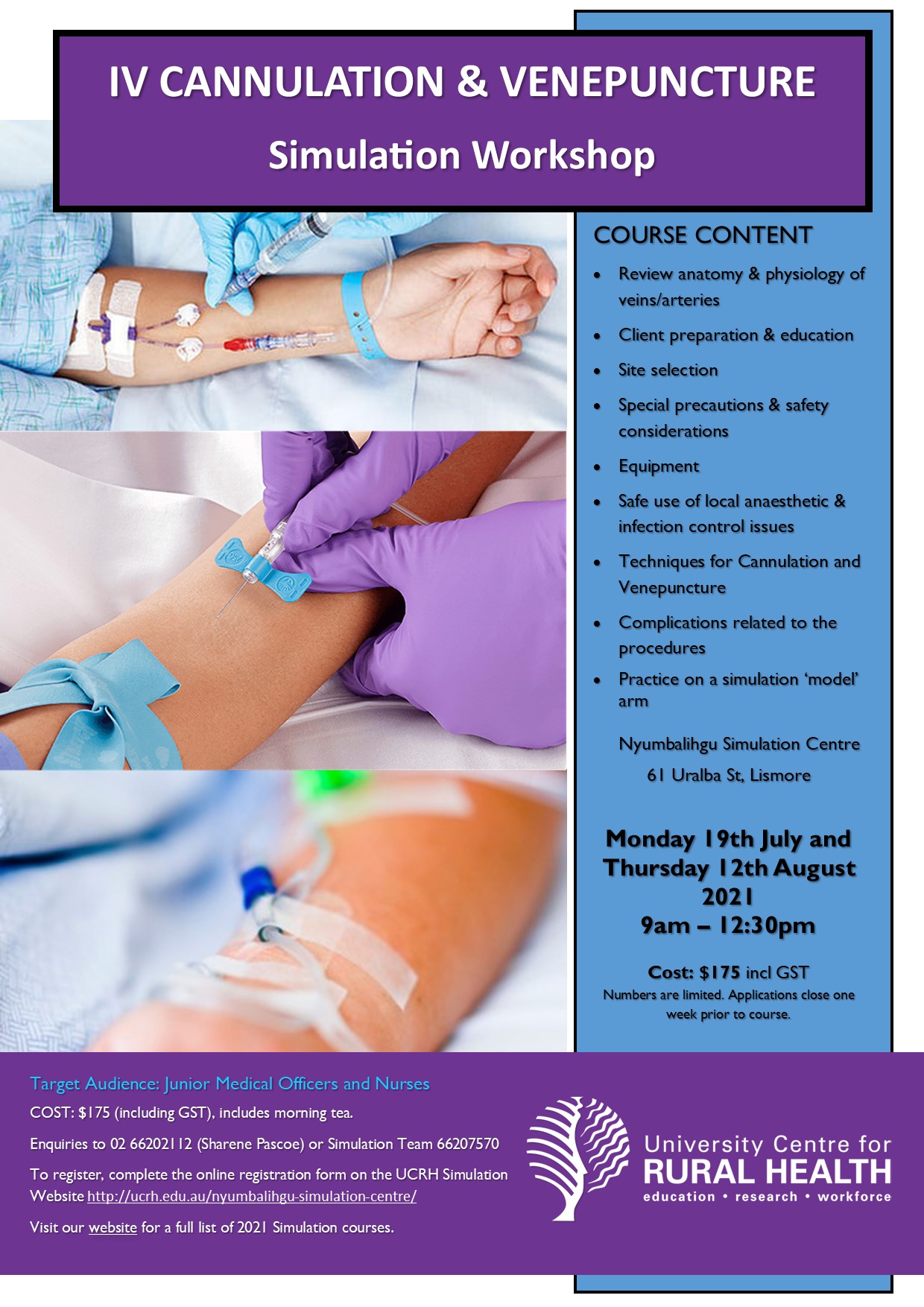
*Please note this course is full – new date TBA* Course content Review anatomy & physiology of veins/arteries Client preparation & education Site selection Special precautions
Search UCRH

*Please note this course is full – new date TBA* Course content Review anatomy & physiology of veins/arteries Client preparation & education Site selection Special precautions
This workshop is designed to develop confidence and skill in the recognition and management of adult patients showing signs of clinical deterioration. Through small group teaching sessions and clinical simulation scenarios,

Course content Review anatomy & physiology of veins/arteries Client preparation & education Site selection Special precautions & safety considerations Equipment Safe use of local
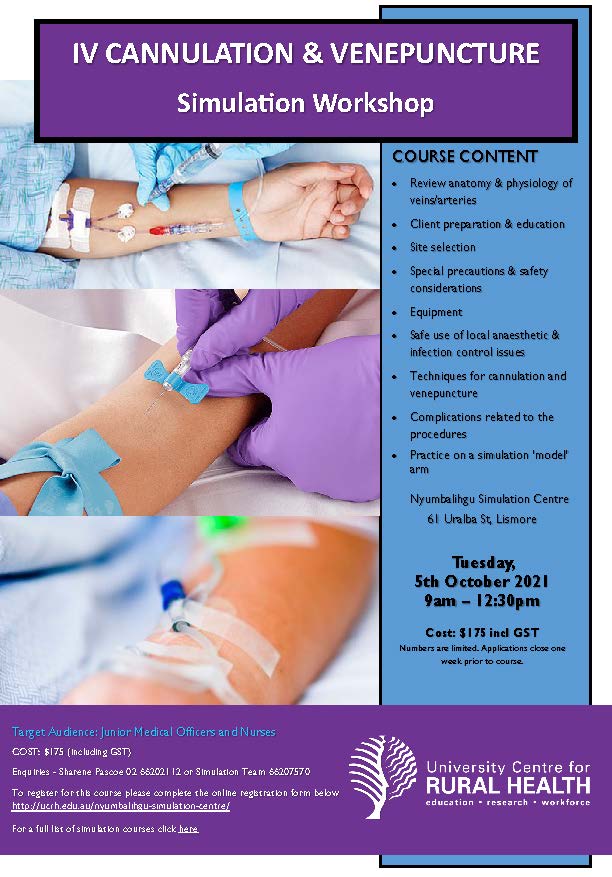
Course content Review anatomy & physiology of veins/arteries Client preparation & education Site selection Special precautions & safety considerations Equipment Safe use of local

Course content Review anatomy & physiology of veins/arteries Client preparation & education Site selection Special precautions & safety considerations Equipment Safe use of local

Course Content Equipment Site selection Client preparation & education Practice on a simulation ‘model’ arm Complications related to the procedures Special precautions & safety considerations Techniques for cannulation and venepuncture
To register or for further information click here Share this …
Workshop Overview: The first Trauma workshop for 2015 is specifically targeted to JMO’s, CMO’s, Registrars and Registered Nurses wishing to gain further experience in the management of trauma. The workshop
Course Overview: This four hour workshop includes a presentation and simulation practice of four common medical emergencies, their recognition, interventions and treatment. Topics covered in the simulation workshop include: Febrile
Course Overview: This four hour workshop provides participants with the opportunity to further develop the knowledge, and skills required to manage the acutely unwell child. Training Methods: A combination of